
Have dating apps started to feel more exhausting than exciting? Why do so many people keep swiping every day while feeling increasingly disconnected from the people they match with?
For millions of users, online dating has become one of the most common ways to meet potential partners. Research from Pew Research Center shows that online dating is now a mainstream part of modern relationships. At the same time, users have access to more profiles, more matches, and more choices than ever before.
Yet more options do not always create better outcomes.
Instead of feeling hopeful, many people report feeling overwhelmed after spending time on dating apps. Endless profile browsing, repeated matching, short conversations that go nowhere, and constant decision-making can gradually turn an exciting experience into a frustrating one. This growing problem is often described as swiping fatigue.
Swiping fatigue is closely connected to broader issues such as dating app fatigue, dating burnout, and emotional exhaustion. Many users continue opening their favorite apps every day, even though the process leaves them feeling less motivated and less optimistic than before.
If this sounds familiar, you are not alone. In fact, many of the frustrations associated with modern online dating are part of a larger pattern that has led people to question whether endless swiping is helping them find meaningful connections or simply keeping them busy. If you have experienced similar feelings, our guide on dating app fatigue explores why these experiences are becoming increasingly common.
Understanding swiping fatigue is the first step toward building a healthier and more effective approach to online dating.
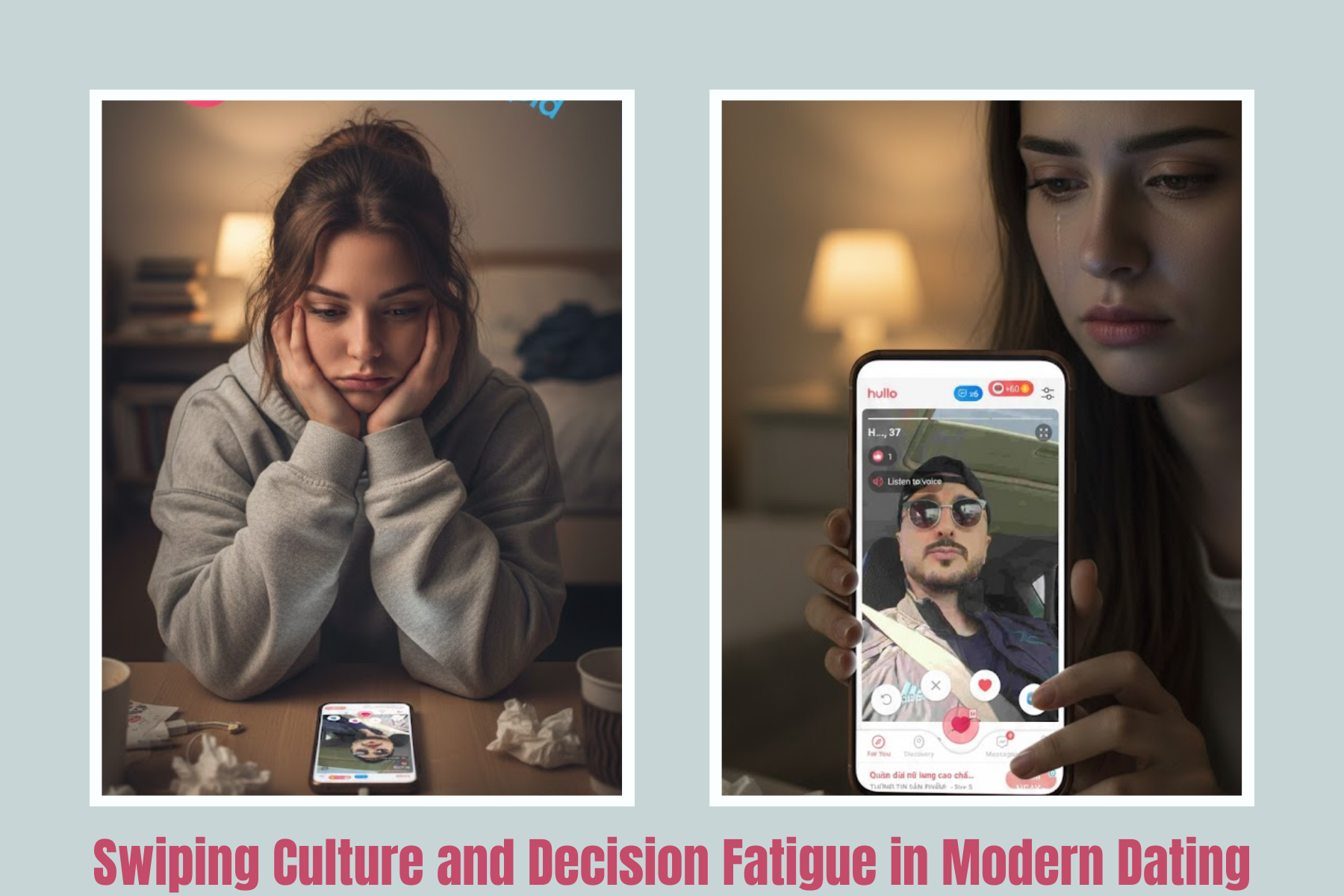
Swiping fatigue is the mental and emotional exhaustion that develops when people repeatedly evaluate large numbers of dating profiles. The constant cycle of choosing, rejecting, matching, and restarting can reduce satisfaction, increase stress, and make online dating feel overwhelming.
What Is Swiping Fatigue?
Swiping fatigue is a form of mental and emotional exhaustion caused by repeatedly browsing, evaluating, and making decisions about dating profiles over long periods of time.
While the term itself emerged alongside swipe-based dating apps, the psychological mechanisms behind it are not new. Researchers have long studied how excessive decision-making affects human behavior. One of the most influential studies on this topic, conducted by Sheena Iyengar and Mark Lepper, found that people often struggle when faced with too many choices. Instead of increasing satisfaction, a larger number of options can make decisions more difficult and less rewarding.
This is why many psychologists compare swiping fatigue to decision fatigue.
Every profile requires a series of small judgments:
- Should I swipe left or right?
- Is this person attractive?
- Do we have enough in common?
- Should I send a message if we match?
- Is there someone better one swipe away?
Individually, these decisions seem insignificant. However, after hundreds of profiles, the cognitive effort begins to accumulate. What starts as a simple activity can gradually become mentally draining.
It is important to distinguish between normal dating frustration and swiping fatigue.
Normal dating frustration usually comes from a specific experience. For example, a conversation may suddenly end, a match may not respond, or a date may not lead to a second meeting. These disappointments are temporary and often tied to individual situations.
Swiping fatigue is different.
Instead of being caused by one event, it develops through repetition. The exhaustion comes from constantly reviewing profiles, making judgments, and restarting the process again and again without feeling closer to a meaningful connection.
Consider a simple example.
Person A reviews 15 carefully selected profiles in one evening and spends time reading each profile before deciding whether to engage.
Person B reviews 300 profiles during the same period, making rapid decisions based on limited information and repeating the process every day.
Which person is more likely to feel mentally exhausted?
For most people, the answer is Person B.
The issue is not dating itself. The issue is the volume of decisions required by modern swiping culture. This helps explain why people are tired of dating apps even when they still want a relationship. Many users are not giving up on dating. They are becoming exhausted by the process designed to help them find it.
Why Swiping Fatigue Is Becoming More Common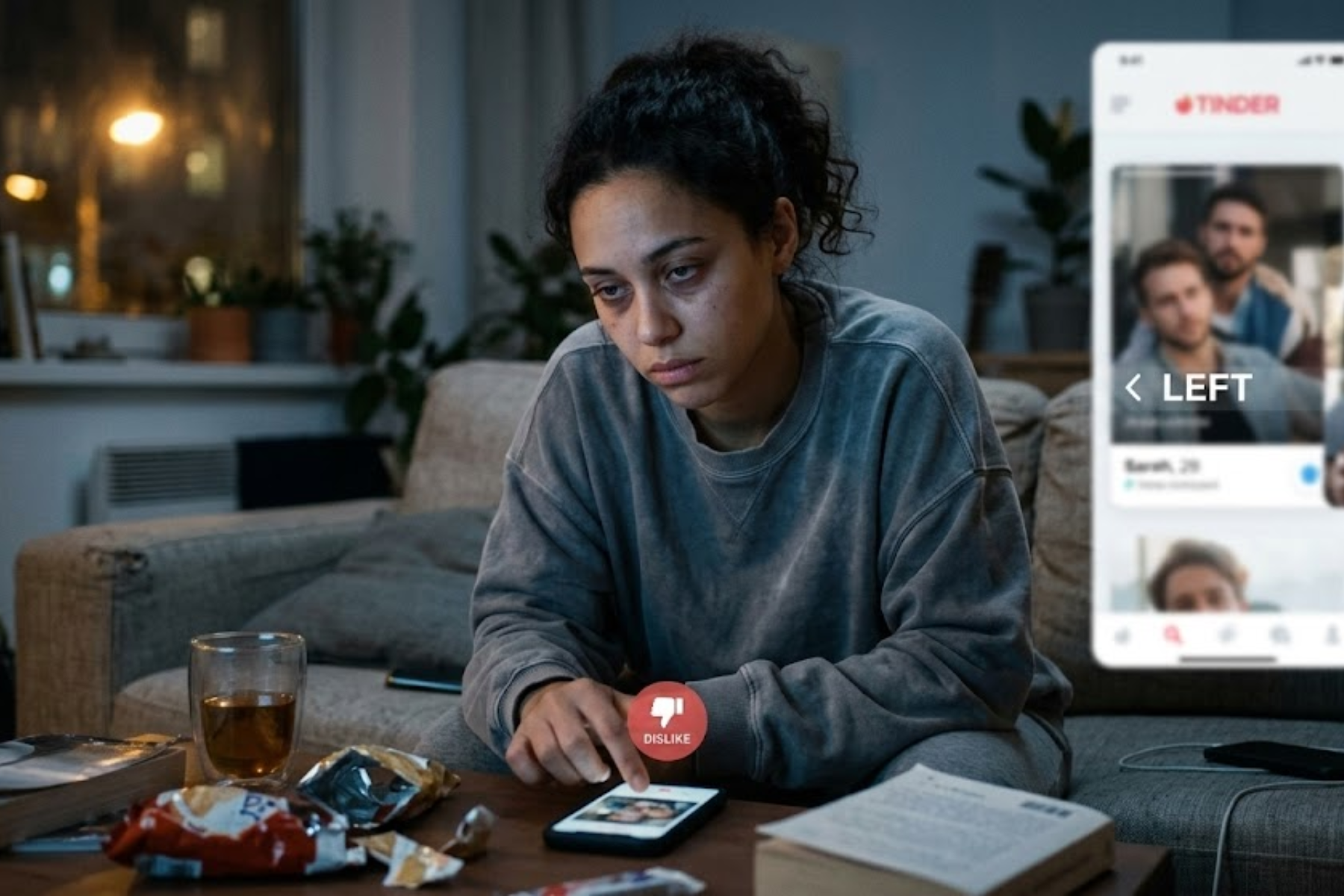
Swiping fatigue is not simply the result of spending too much time on dating apps. It is a predictable outcome of how modern platforms are designed and how people interact with them. As online dating has become more popular, users have gained access to an unprecedented number of potential matches. While this may sound like an advantage, research suggests that unlimited choice can sometimes make decision-making more difficult rather than easier.
Dating Apps Create Endless Choice
One of the biggest reasons swiping fatigue is becoming more common is the sheer number of profiles available on modern dating apps.
Unlike traditional social environments where people typically meet a limited number of potential partners, dating apps provide access to hundreds or even thousands of profiles. Every swipe requires a decision. Every decision requires attention. Over time, this constant evaluation can become mentally exhausting.
Research from the Iyengar & Lepper Choice Overload Study found that while people are often attracted to having more options, they tend to become less satisfied with their decisions when faced with excessive choice.
The same pattern appears in online dating.
When users have unlimited access to potential matches, they may begin to question every decision they make:
- Did I swipe left too quickly?
- Should I have given that profile another chance?
- Is there someone better coming next?
Instead of increasing confidence, endless choice can create uncertainty. The result is a cycle where users continue browsing even when they are already overwhelmed.
More Matches Do Not Mean Better Connections
Many people assume that getting more matches will automatically improve their chances of finding a meaningful relationship.
In reality, quantity and quality are not the same thing.
A user might collect dozens of matches in a week while having very few meaningful conversations. This disconnect often creates frustration because the effort invested does not produce the expected emotional reward.
This helps explain why many users experience disappointment despite receiving attention on dating apps. The problem is not necessarily a lack of matches. The problem is that most matches never develop into genuine interactions.
If you’ve ever wondered why dating app matches rarely turn into conversations, swiping fatigue is part of the answer. As users become overwhelmed by the volume of matches and profiles, they often invest less attention in each individual connection.
The result is a paradox:
- More matches
- Less engagement
- Lower satisfaction
Modern Swiping Encourages Fast Judgments
Another factor contributing to swiping fatigue is the speed at which decisions are made.
Most dating apps encourage users to evaluate profiles within seconds. Photos are often viewed before bios, interests, or personality traits. This creates an environment where appearance becomes the primary filter.
While quick decisions may feel efficient, they also increase cognitive load. Users make hundreds of snap judgments based on limited information, often without enough context to determine real compatibility.
Over time, profile overload begins to develop.
When every profile starts looking similar, the brain struggles to process meaningful differences. Instead of feeling curious and engaged, users become numb to the experience. The process becomes repetitive, reducing excitement and increasing emotional fatigue.
What started as an opportunity to meet new people gradually transforms into a routine of endless evaluation, making swiping fatigue more common than ever.
The Psychology Behind Swiping Fatigue
Swiping fatigue is not just a dating problem. It is also a psychological phenomenon rooted in how the human brain processes decisions, rewards, and emotional experiences.
The more frequently people engage in repetitive decision-making, the more mental resources they consume. Dating apps amplify this effect because they combine decision overload, unpredictable rewards, and emotional highs and lows into a single experience.
Decision Overload
Every swipe represents a decision.
Viewed individually, these choices seem insignificant. However, a person who reviews hundreds of profiles in a week may make thousands of small judgments over time.
These repeated micro-decisions require attention and mental energy.
Psychologists often refer to this phenomenon as decision overload. As decision volume increases, cognitive resources become depleted. Users may find it harder to evaluate profiles thoughtfully, resulting in rushed choices and lower satisfaction.
Examples of common micro-decisions include:
- Swipe left or right
- Send a message or wait
- Continue a conversation or move on
- Invest time in a match or keep browsing
The accumulation of these choices contributes directly to swiping fatigue.
Reward Loops and Uncertainty
Dating apps are built around anticipation.
A new match could appear at any moment. A message notification could arrive unexpectedly. Someone interesting might be just one swipe away.
This uncertainty keeps users engaged because rewards are delivered inconsistently.
Sometimes users receive several matches in a short period. Other times they receive none.
This pattern creates intermittent rewards, which are often more compelling than predictable rewards. The possibility of a positive outcome encourages continued swiping, even when the overall experience is becoming less enjoyable.
As a result, users may continue using dating apps long after the activity stops feeling rewarding.
The expectation of a future match becomes stronger than the satisfaction of current interactions.
If endless swiping leaves you emotionally exhausted, Hullo focuses on compatibility signals and meaningful introductions rather than encouraging users to spend hours browsing profiles. Try Hullo at hullo.dating
Emotional Exhaustion
Beyond cognitive fatigue, online dating can also create emotional fatigue.
Many users experience repeated cycles of:
- Hope
- Excitement
- Disappointment
- Restarting
A promising match may stop replying. A conversation may never progress beyond small talk. A strong connection may suddenly disappear.
These experiences are normal parts of dating, but repeated exposure can become emotionally draining.
According to Pew Research Center’s online dating findings, many dating app users report frustrating experiences despite continuing to use these platforms. Younger adults, who are among the most active users of online dating services, also report a mixture of positive and negative outcomes.
This combination of optimism and frustration creates a unique emotional challenge. People continue searching because they believe meaningful connections are possible, yet repeated disappointments gradually reduce enthusiasm.
For many users, this raises an important question: are dating apps a waste of time or is the problem the way they are being used?
The answer often depends on whether users can move beyond endless swiping and focus on building higher-quality connections.
Hullo is an AI-powered matchmaking app that uses behavioral learning, interests, zodiac compatibility, and location signals to improve match relevance. Instead of encouraging endless browsing, Hullo focuses on helping users discover more meaningful connections. Features like First Voice allow users to hear someone’s real voice before starting a conversation, creating a more authentic experience.
Signs You May Be Experiencing Swiping Fatigue
Many people assume they are simply having a bad week on dating apps when the reality is that they are experiencing swiping fatigue. The condition often develops gradually, making it difficult to recognize at first. Because the symptoms build over time, users may continue swiping long after the experience has stopped feeling productive or enjoyable.
Recognizing these warning signs can help you take action before dating burnout becomes more severe.
Every Profile Starts Looking Similar
One of the earliest signs of swiping fatigue is profile blindness.
At the beginning of your dating app experience, each profile feels unique. You notice details, interests, hobbies, and personality traits.
Over time, however, profiles can begin to blur together.
Instead of seeing individuals, you start seeing patterns. The excitement of discovering someone new is replaced by a feeling that you’ve already seen everything before.
This is often a sign that your brain is becoming overwhelmed by excessive profile exposure.
You Swipe Without Reading Profiles
Another common symptom is automatic swiping.
You may find yourself making decisions based entirely on photos without reading bios, interests, prompts, or personal information.
This behavior reduces the quality of matches because decisions become faster but less intentional.
The goal shifts from finding compatibility to simply moving through profiles.
When swiping becomes automatic, meaningful evaluation starts to disappear.
Matching Feels More Like a Chore Than an Opportunity
For many users, matching initially feels exciting.
Over time, however, the emotional reward begins to fade.
Instead of feeling curious about a new match, you may feel indifferent or even annoyed by another notification.
This is often a sign that your emotional investment has declined due to overexposure and repeated disappointment.
You Feel Drained After Using Dating Apps
Dating apps are supposed to help people meet others, not leave them mentally exhausted.
If you consistently feel tired, frustrated, distracted, or emotionally depleted after a swiping session, swiping fatigue may be the cause.
The exhaustion often comes from constant evaluation rather than from the matches themselves.
You Stop Responding to Matches
One of the strongest indicators of swiping fatigue is reduced engagement.
You may continue collecting matches but stop initiating conversations or replying to messages.
This often happens because users become emotionally overwhelmed and begin treating matches as another task on a growing list of unfinished interactions.
Over time, this pattern can contribute to behaviors associated with ghosting culture and emotional burnout, creating frustration for both sides of the conversation.
How Dating App Algorithms Can Contribute to Swiping Fatigue
Many people assume swiping fatigue is simply the result of spending too much time on dating apps. While user behavior certainly plays a role, the design of modern dating platforms also deserves attention. In particular, recommendation algorithms can significantly influence how users interact with matches, conversations, and the overall dating experience.
Most dating apps are powered by algorithms designed to maximize user engagement. These systems analyze behavior patterns and attempt to keep people active within the app for as long as possible. From a business perspective, higher engagement often means more daily usage, more notifications, and more opportunities to generate revenue.
However, maximizing engagement is not always the same as maximizing relationship success.
A person looking for a meaningful relationship typically wants fewer but better matches. They want conversations that lead somewhere, stronger compatibility, and less wasted time. Dating platforms, on the other hand, often measure success through activity metrics such as session length, swipe volume, and return frequency.
This difference creates an important gap between platform goals and user goals.
Platform Goals vs User Goals
| User Wants | Platform Often Optimizes |
|---|---|
| Real connection | More activity |
| Better conversations | More sessions |
| Compatibility | More engagement |
This does not mean dating apps intentionally prevent relationships from forming. However, engagement-focused systems can sometimes encourage behaviors that increase activity without improving outcomes.
For example, a platform may continuously introduce new profiles even when a user already has several active matches. While this keeps the experience dynamic, it can also create a sense that there is always another option available. Instead of investing in existing conversations, users may continue browsing.
This pattern reinforces the cycle of endless evaluation that contributes to swiping fatigue.
Another challenge is that algorithms often prioritize signals that are easy to measure. Swipes, likes, profile views, and message counts generate large amounts of data. Compatibility, emotional connection, and long-term relationship potential are far more difficult to quantify.
As a result, users may receive more opportunities to interact without necessarily receiving better opportunities.
Over time, this can create a frustrating experience where people spend significant amounts of time on dating apps but feel no closer to finding a meaningful connection.
The growing disconnect between engagement metrics and relationship outcomes is one reason many users have started questioning whether current matching systems truly support long-term success. If you want a deeper look at this issue, our article on how dating app algorithms are failing real connections explores how algorithm-driven engagement can sometimes work against authentic relationship building.
Ultimately, swiping fatigue is not only about individual behavior. It is also about the environments that encourage endless browsing, constant evaluation, and continuous activity without guaranteeing meaningful results.
What Hullo User Trends Reveal About Swiping Fatigue
While public research helps explain the psychology behind swiping fatigue, user behavior patterns can provide additional insight into how dating burnout develops in real-world environments.
According to Hullo internal user trends (2026), many of the behaviors associated with swiping fatigue become visible long before users decide to leave a dating platform altogether.
Hullo Dating Insights (2026)
| User Behavior Metric | Hullo User Trend |
|---|---|
| Matches that become conversations | 62% |
| Conversations lasting 3+ days | 38% |
| Average reply time | 18 minutes |
| Most active period | 9:00 PM to 12:00 AM |
| Users reporting better experiences after reducing daily swiping | 57% |
| Users preferring compatibility-based matching over endless browsing | 71% |
| International matches among active users | 41% |
These trends suggest that many users are not necessarily tired of dating itself. Instead, they are becoming exhausted by the process of evaluating large numbers of profiles without seeing meaningful progress.
Interestingly, users who reported limiting their daily swiping activity often maintained longer conversations and showed higher engagement rates than users who spent extended periods browsing profiles.
This aligns with broader findings from Pew Research Center’s online dating research, which found that many users continue using dating apps despite reporting frustrating experiences.
Short-Term Engagement vs Long-Term Satisfaction
| Behavior | Short-Term Engagement | Long-Term Satisfaction |
|---|---|---|
| Endless swiping | High | Low |
| Large match volume | High | Moderate |
| Frequent profile browsing | High | Low |
| Personalized conversations | Moderate | High |
| Compatibility-focused matching | Moderate | High |
| Meaningful relationship outcomes | Low immediate reward | Very High |
The contrast is important. Activities that generate the highest engagement often do not generate the highest satisfaction. Users may spend hours browsing profiles and collecting matches while feeling increasingly disconnected from the process.
By comparison, users who focus on compatibility, conversation quality, and intentional interactions tend to report more positive dating experiences over time.
The key takeaway is simple: swiping more does not necessarily improve dating outcomes. In many cases, reducing unnecessary decisions and prioritizing meaningful interactions may be one of the most effective ways to avoid swiping fatigue.
Why Swiping Fatigue Often Leads to Ghosting and Mixed Signals
One of the most overlooked consequences of swiping fatigue is the impact it has on communication. While many people think ghosting and mixed signals are caused by a lack of interest, the reality is often more complicated. Mental exhaustion can significantly affect how people engage with matches, respond to messages, and maintain conversations.
As swiping fatigue increases, communication quality tends to decrease.
When users are mentally fresh, they are more likely to read profiles carefully, ask thoughtful questions, and invest time in getting to know someone. However, after weeks or months of endless browsing, many people begin operating on autopilot.
The result is lower effort interactions.
Messages become shorter. Responses become slower. Conversations become less engaging.
Eventually, communication starts to break down altogether.
Response Quality Decreases
A user who has reviewed hundreds of profiles and managed dozens of conversations may struggle to give each interaction the attention it deserves.
Instead of responding thoughtfully, they may:
- Delay replies
- Send generic messages
- Forget conversation details
- Lose motivation to continue chatting
This often creates the impression that they are no longer interested, even when that is not necessarily true.
Communication Declines
Swiping fatigue can also reduce emotional availability.
People who feel overwhelmed often shift from active participation to passive browsing. They continue using dating apps but invest less effort in meaningful communication.
This behavior contributes to many of the challenges explored in our article about mixed signals in dating.
Someone may:
- Match enthusiastically
- Start a conversation
- Respond consistently for several days
- Suddenly become distant
From the other person’s perspective, these changes can be confusing. In reality, emotional exhaustion is often part of the explanation.
Ghosting Becomes More Common
When mental fatigue reaches a certain point, some users stop responding entirely.
This does not always happen because they dislike the other person. Sometimes they simply lack the emotional energy required to continue multiple conversations.
As communication becomes overwhelming, ghosting can feel easier than explaining their feelings or intentions.
This pattern has become increasingly common in modern dating culture and is closely connected to the issues discussed in our article on ghosting culture and emotional burnout.
Real-Life Example: The Swiping Fatigue Cycle
A typical user journey often looks like this:
| Stage | Experience |
|---|---|
| Excited | Downloads a dating app and actively explores profiles |
| Active | Matches frequently and enjoys meeting new people |
| Overwhelmed | Experiences profile overload and conversation fatigue |
| Disengaged | Responds less often, ghosts matches, or stops using the app |
Many users do not realize they are moving through this cycle until dating starts feeling more exhausting than enjoyable.
Building a stronger profile can reduce low-quality matches and improve conversation quality. Hullo’s AI Bio Generator helps users create more authentic and engaging dating profiles: hullo.dating/ai-bio-generator
How to Reduce Swiping Fatigue and Enjoy Dating Again
The good news is that swiping fatigue is not permanent. In most cases, the solution is not abandoning online dating altogether. Instead, it involves changing how you use dating apps and becoming more intentional about where you invest your time and energy.
Small adjustments can significantly improve both your experience and your chances of building meaningful connections.
Limit Daily Swiping Time
One of the simplest ways to reduce swiping fatigue is to set clear limits on app usage.
Many users spend far more time browsing profiles than they realize. What starts as a five-minute session can quickly become an hour of continuous evaluation.
Consider limiting swiping to around 15 minutes per day.
This approach helps reduce decision overload while encouraging more thoughtful choices.
Benefits include:
- Less mental exhaustion
- Better focus
- More intentional matching
- Reduced profile overload
The goal is not to maximize swipes. The goal is to maximize meaningful opportunities.
Focus on Fewer Matches
Many people believe that more matches increase the likelihood of finding a compatible partner.
In reality, managing dozens of conversations often creates more stress than success.
A better approach is to focus on a smaller number of promising matches and invest more attention in each interaction.
Quality almost always outperforms quantity in long-term relationship building.
Instead of asking:
How many matches did I get today?
Ask:
Which conversations are worth developing further?
This mindset shift alone can significantly reduce dating burnout.
Improve Conversation Quality
Strong conversations create stronger connections.
Rather than relying on generic openers such as:
- Hi
- Hey
- What’s up?
Use personalized messages based on profile details.
For example:
- Ask about a travel destination they mentioned.
- Comment on a hobby they enjoy.
- Reference a shared interest.
Personalized openers demonstrate effort and make conversations feel more authentic.
At Hullo, we noticed that international matches often generate longer conversations when users mention future travel plans, cultural interests, or destinations they would like to visit in their profiles.
Profiles that provide specific conversation starters generally receive more meaningful responses than profiles containing only basic information.
This suggests that stronger profiles can reduce friction and help users move beyond surface-level interactions more quickly.
Take Breaks When Needed
Not every solution involves doing more.
Sometimes the most effective strategy is taking a break.
If dating apps consistently leave you feeling frustrated, drained, or unmotivated, stepping away for a few days or weeks can help reset your mindset.
Benefits of digital recovery include:
- Reduced emotional exhaustion
- Improved perspective
- Better decision-making
- Increased enthusiasm when returning
A short break is often more productive than forcing yourself to continue swiping when your energy is already depleted.
Choose Platforms Designed Around Compatibility
The design of a dating platform can have a major impact on user experience.
Apps built primarily around endless browsing often encourage quantity-focused behavior. By contrast, compatibility-focused platforms attempt to reduce unnecessary choices and improve match relevance.
Key factors to look for include:
- Compatibility matching
- Shared interests
- Behavioral insights
- Conversation quality
- Authentic profile experiences
This growing demand for meaningful interactions is one reason many users are questioning why dating apps feel fake and exploring alternatives that prioritize genuine connection over endless engagement.
When users spend less time evaluating hundreds of profiles and more time connecting with compatible people, online dating often becomes less exhausting and significantly more rewarding.
Can AI Matchmaking Reduce Swiping Fatigue?
As more people become frustrated with endless swiping, many dating platforms are exploring alternative ways to help users find meaningful connections. One of the most promising developments is AI-powered matchmaking.
Traditional dating apps often rely heavily on user activity. The more profiles you view, the more opportunities the system has to collect data and keep you engaged. While this approach creates a steady stream of potential matches, it can also contribute to the decision overload that fuels swiping fatigue.
AI matchmaking takes a different approach.
Instead of encouraging users to evaluate hundreds of profiles manually, AI systems attempt to identify stronger matches based on behavioral patterns, interests, compatibility indicators, and engagement signals.
Traditional Swiping vs AI-Based Matching
| Traditional Swiping | AI-Based Matching |
|---|---|
| Large volume of profiles | More targeted recommendations |
| Heavy focus on appearance | Broader compatibility signals |
| Continuous evaluation | Reduced decision burden |
| More manual filtering | Automated compatibility analysis |
| Quantity-driven experience | Quality-focused experience |
The goal is not to eliminate user choice entirely. The goal is to reduce unnecessary choices and help users focus on the people most likely to be compatible.
Fewer Irrelevant Profiles
One of the biggest frustrations in online dating is spending time reviewing profiles that clearly are not a good fit.
AI matchmaking can help reduce this problem by learning from user behavior and identifying patterns that indicate compatibility.
Rather than presenting every available profile, the system can prioritize people who share meaningful similarities.
This reduces profile overload while increasing the likelihood of productive conversations.
Behavioral Analysis and Interest Matching
Modern AI systems can evaluate far more than simple profile preferences.
Behavioral analysis may include:
- Interaction patterns
- Communication habits
- Profile engagement
- Shared interests
- Matching preferences
Interest matching adds another layer by helping users discover people with similar lifestyles, hobbies, goals, and values.
When users spend less time sorting through incompatible profiles, they often experience lower levels of swiping fatigue.
Compatibility Signals Matter More Than Volume
Compatibility is difficult to measure with a single photo.
Meaningful connections often depend on factors such as:
- Personality
- Lifestyle preferences
- Communication style
- Relationship goals
- Shared interests
AI systems can use these signals to create stronger recommendations, helping users focus on quality interactions instead of endless browsing.
How Hullo Approaches AI Matchmaking

Hullo is an AI-powered matchmaking app designed to create more meaningful connections through compatibility-focused matching.
Rather than relying solely on profile photos and swipe activity, Hullo analyzes multiple compatibility signals, including:
- User behavior
- Interests
- Zodiac compatibility
- Location matching
- Interaction preferences
This approach helps reduce random matching and encourages more relevant introductions.
By learning from user behavior over time, the platform aims to improve match quality while reducing the need for excessive swiping.
First Voice: Hear Someone Before You Chat
One of Hullo’s most distinctive features is First Voice, which allows users to hear someone’s real voice before starting a conversation.
Traditional dating apps rely heavily on photos. While photos are important, they rarely tell the full story.
Voice can reveal:
- Personality
- Energy
- Communication style
- Confidence
- Authenticity
Many users find that hearing someone’s voice creates a stronger first impression than photos alone.
This can help reduce superficial judgments and encourage more genuine interactions.
Instead of focusing exclusively on appearance, users gain another way to evaluate compatibility before investing time in conversations.
If you are tired of endless profile browsing, Hullo combines AI matchmaking and First Voice to help users focus on meaningful compatibility before investing time in conversations: hullo.dating/download
Swiping fatigue is a real and increasingly common challenge in modern online dating. While dating apps have made it easier than ever to meet new people, they have also introduced an environment built around constant decision-making, endless choice, and continuous evaluation.
As this article has shown, swiping fatigue is rooted in well-established psychological principles. Decision overload, profile saturation, emotional exhaustion, and repeated disappointment can gradually transform an exciting dating experience into a frustrating one.
The problem is not that people have too few options.
In many cases, the problem is that they have too many.
When every interaction feels replaceable and every profile competes with hundreds of others, meaningful connections become harder to recognize and develop.
Fortunately, there are practical ways to reduce dating burnout. Limiting swiping time, focusing on fewer matches, improving conversation quality, taking breaks when necessary, and choosing compatibility-focused platforms can all help create a healthier experience.
The solution is not necessarily quitting dating apps.
The solution may be using them more intentionally and choosing platforms that prioritize compatibility over endless browsing.
When quality becomes more important than quantity, online dating often feels less exhausting and far more rewarding.
People Also Ask
1. What is swiping fatigue?
It is mental exhaustion caused by repeatedly swiping on dating apps.
2. Why do dating apps feel tiring?
Because constant decisions and low-quality matches drain your energy.
3. How can you fix swiping fatigue?
By limiting swiping and focusing on meaningful interactions.
4. Is swiping fatigue bad for mental health?
Yes, it can lead to stress and emotional burnout over time.
5. Are there alternatives to swipe-based dating?
Yes, such as AI matchmaking and voice-first dating platforms.