
Have you ever opened a dating app and instantly felt tired instead of excited?
That feeling has become surprisingly common. What once felt like a convenient and even exciting way to meet new people now often feels repetitive, draining, and emotionally unfulfilling. This shift is widely described as dating app fatigue, and it is affecting a growing number of users worldwide.
According to a study by the Pew Research Center, nearly 60% of online daters report negative experiences, including emotional burnout and frustration with interactions. What used to feel like endless opportunity now often feels like endless effort with little reward.
Instead of meaningful conversations, users face ghosting, shallow interactions, and repetitive patterns. Over time, this leads to emotional exhaustion rather than connection.
This article breaks down what dating app fatigue really is, why it is increasing, and how you can overcome it with more intentional strategies. For a deeper look at the mindset behind endless swiping, see swiping culture and decision fatigue in modern dating.
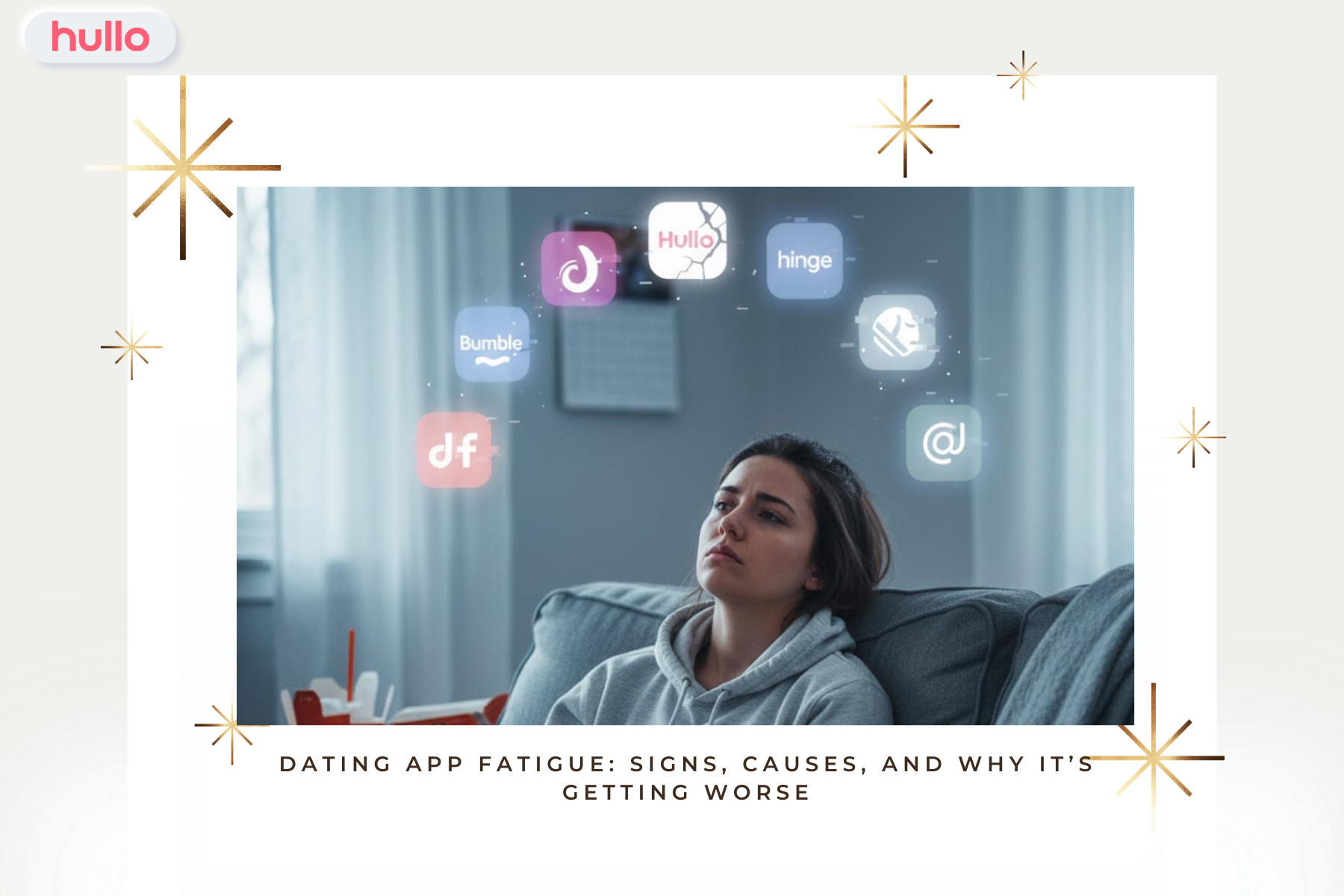
Dating app fatigue is the emotional exhaustion caused by repetitive swiping, shallow conversations, and lack of meaningful connections. It often leads to low motivation, boredom, and disengagement from dating platforms. To overcome dating app fatigue, users should focus on quality over quantity, improve profile clarity, and use platforms that prioritize compatibility over endless swiping.
What Is Dating App Fatigue?
Dating app fatigue refers to the emotional and mental exhaustion that develops after prolonged use of dating platforms without meaningful results.
It is important to distinguish this from normal dating frustration. Occasional disappointment is a natural part of dating. Fatigue, however, is more persistent. It shows up as ongoing disengagement, low motivation, and a reduced emotional response to matches and conversations.
Psychologically, dating app fatigue is linked to two key factors. The first is dopamine overload. Constant swiping creates short bursts of excitement, but over time, the brain becomes less responsive to these rewards. The second is decision fatigue. When users are exposed to hundreds of profiles, the effort required to evaluate each one becomes mentally draining.
Research from Stanford University highlights how excessive choice can reduce satisfaction and increase anxiety, even when options appear beneficial.
In the early stages, fatigue may appear as mild boredom or reduced enthusiasm. Over time, it can evolve into emotional numbness, where users continue using apps but no longer feel genuinely interested in connecting. This is why why people are tired of dating apps in 2026 has become such a relevant question for modern daters.
Signs of Dating App Fatigue
Dating app fatigue often builds gradually rather than appearing suddenly. Many users do not recognize it until their behavior has already changed.
Common signs include:
- Losing motivation to reply
Messages feel like a chore rather than an opportunity to connect. - Swiping without interest
Users continue swiping out of habit, not genuine curiosity. - Conversations feel repetitive
Many chats follow the same patterns with little emotional depth. - Taking frequent breaks
Users uninstall or avoid apps temporarily, only to return later.
Each of these behaviors reflects a deeper issue. When interactions consistently lack meaning, users begin to disengage emotionally as a form of self-protection.
A report by eHarmony found that repetitive low-quality interactions are one of the main reasons users leave dating platforms within months.
Over time, these patterns reinforce themselves. The less effort users put in, the lower the quality of interactions they receive, which further accelerates fatigue. One common symptom is that dating app matches rarely turn into conversations, even when the initial interest seems strong.
Why Dating App Fatigue Is Increasing
Swipe Culture and Choice Overload
Swipe-based interfaces have transformed how people evaluate potential matches. While they make dating faster, they also encourage rapid, surface-level decisions.
Studies suggest users spend as little as 7 seconds evaluating a profile, leading to quick judgments based on limited information.
With hundreds of options available, users may feel they should always keep looking for something better. This creates a paradox where more choice leads to less satisfaction.
Repetitive Conversations
Another major contributor to dating app fatigue is the repetitive nature of conversations.
Many interactions begin with generic openers like “Hi” or “How are you,” which rarely lead to meaningful dialogue. According to research from Hinge, over 50% of conversations end after just a few messages due to lack of engagement.
Without emotional depth, conversations quickly lose momentum.
Lack of Authentic Connection
Many users also report that profiles feel increasingly generic or curated for approval rather than authenticity.
This creates a sense of disconnection even before a conversation begins. When profiles do not reflect real personalities, interactions feel less meaningful.
For a deeper look at this issue, you can explore this analysis on how dating app algorithms are failing real connections.
When dating feels performative instead of genuine, emotional fatigue becomes almost inevitable.
Why Users Burn Out Faster
One of the clearest patterns behind dating app fatigue is how user behavior directly influences emotional outcomes.
According to Hullo data, users who rely on generic opening messages receive significantly fewer replies and shorter conversations. In contrast, those who start with personalized questions experience up to 2x higher response rates and longer engagement.
Another key insight involves swiping behavior. Users who swipe excessively, often reviewing more than 100 profiles per session, report faster emotional burnout. This aligns with broader research on decision fatigue, where too many choices reduce satisfaction and increase mental strain.
Behavioral tracking also shows that when users shift from quantity to quality, focusing on fewer but more relevant matches, their overall experience improves. Conversations last longer, and emotional engagement increases.
These insights suggest that fatigue is not only a platform issue but also a behavioral pattern that can be adjusted.
Emotional Impact of Dating App Fatigue
Dating app fatigue goes beyond inconvenience. It can have real psychological effects on users over time.
One of the most common impacts is self-doubt. When messages go unanswered or conversations fade, users may begin to question their attractiveness or communication skills.
This is closely linked to declining self-esteem. A study published in Computers in Human Behavior found that frequent dating app use can negatively influence body image and confidence, particularly when users compare themselves to others (source).
Another major factor is anxiety caused by ghosting. When conversations end abruptly without explanation, users are left with uncertainty, which can increase emotional stress.
Over time, these effects create a cycle:
- fatigue reduces effort
- lower effort leads to weaker interactions
- weaker interactions reinforce frustration
As this cycle continues, users may disengage emotionally altogether, making meaningful connections even less likely.