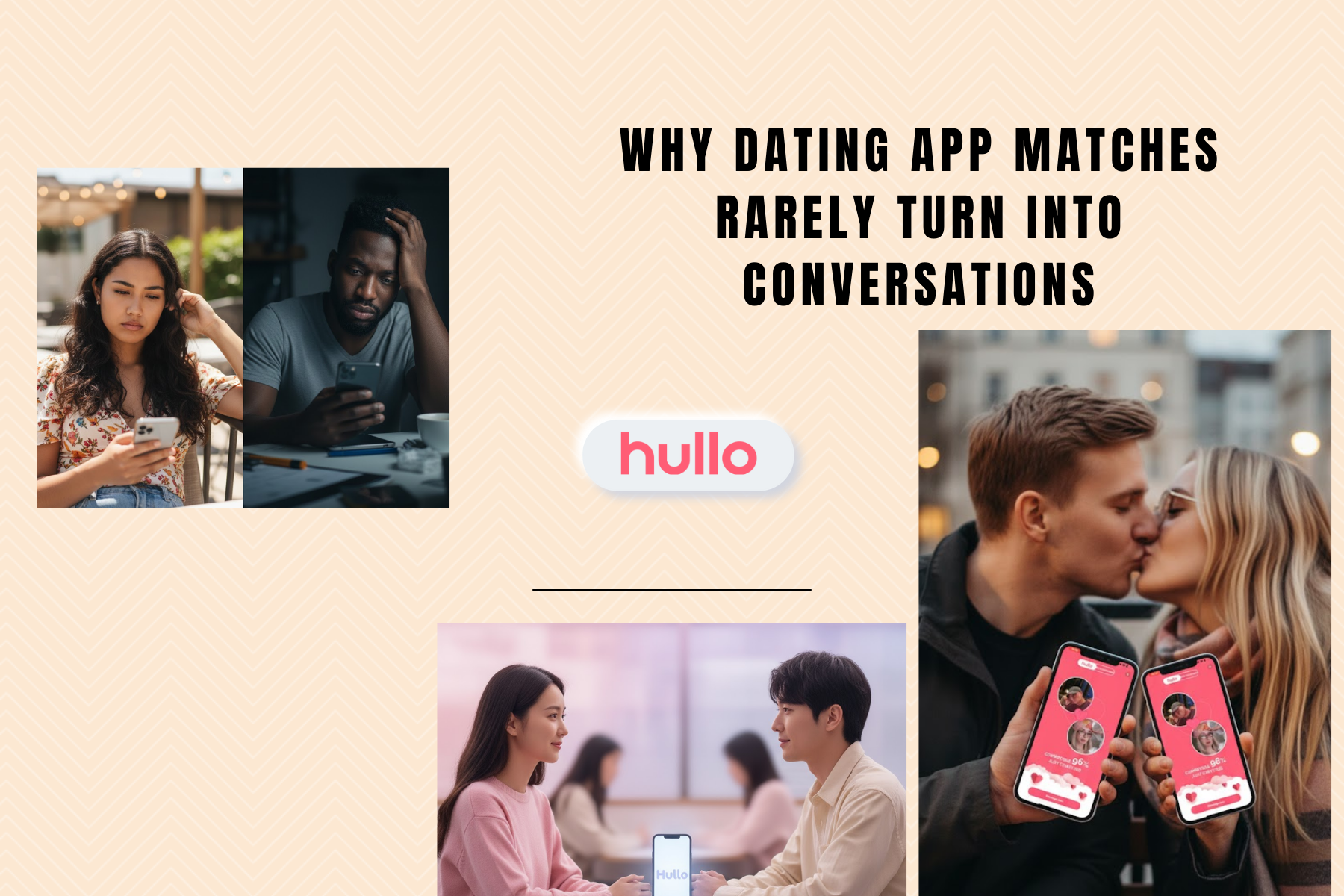
What a Dating App Match Really Means Today
The meaning of a dating app match has changed significantly over the past decade.
In the early days of online dating, matching often reflected genuine curiosity. Users tended to be more selective. Receiving a match usually suggested that someone wanted to learn more about the other person.
Today, the process works very differently.
Matches No Longer Signal Strong Interest
Most dating apps are designed around quick decisions. Users can review dozens of profiles within minutes. Often, they spend only a few seconds looking at each profile before making a choice.
As a result, matching requires very little effort.
A swipe may indicate:
- Physical attraction
- Curiosity
- Temporary interest
- Impulsive behavior
However, it does not necessarily indicate a desire to start a conversation.
This difference matters because many users still treat matches as strong signals of interest. When no message follows, disappointment quickly appears.
Therefore, understanding the limits of a match helps create more realistic expectations.
Match Potential vs Match Intent
A useful way to understand modern dating apps is to separate potential from action.
| Type |
Meaning |
| Match |
Possible interest |
| Message |
Active interest |
| Ongoing conversation |
Genuine engagement |
A match creates an opportunity.
Sending a message requires effort.
Real interest becomes clearer when a conversation continues over time.
Therefore, the strongest signal is not the match itself. Instead, it is the willingness to keep engaging.
At Hullo, we noticed that users often overestimate the meaning of a match. Conversations, not matches, are a far stronger indicator of genuine interest. Users who focus on communication quality rather than match counts generally report higher satisfaction with their dating experience.
Why Dating App Matches Rarely Turn Into Conversations
Several behavioral patterns help explain why so many matches remain silent.
Swipe Fatigue Reduces Motivation
One major reason is emotional exhaustion.
Many users spend long periods swiping through profiles every week. At first, the process feels exciting. Eventually, however, it becomes repetitive.
According to Pew Research Center findings, many online daters report feeling overwhelmed or frustrated while using dating apps.
This pattern closely matches the symptoms described in dating app fatigue signs causes and why it’s getting worse.
When fatigue develops, users often continue matching. However, they stop engaging.
They collect matches.
They browse profiles.
Yet they rarely start conversations.
As a result, silence becomes increasingly common.
Choice Overload Creates Inaction
Another important factor is choice overload.
Dating apps provide an endless stream of profiles. At first, this seems helpful. More options should create better outcomes.
Research suggests otherwise.
The well-known Iyengar and Lepper study found that too many choices often reduce action and increase indecision.
Dating apps create a similar situation.
A user matches with someone interesting.
Then another profile appears.
Then another.
Then another.
Because new options constantly appear, many users delay engagement. Instead of investing in one conversation, they continue searching.
Consequently, many matches never receive a message.
The problem is not a lack of options.
Instead, there are often too many.
Low Emotional Investment
Matching is easy.
Messaging feels harder.
A thoughtful first message requires:
- Attention
- Creativity
- Vulnerability
- Emotional effort
Many users are willing to swipe. Far fewer are willing to take the next step.
This imbalance explains why matches accumulate much faster than conversations.
In many cases, attraction exists.
However, motivation does not.
As a result, users acknowledge a match but never act on it.
At Hullo, we noticed that users who limit swiping sessions often maintain longer conversations than users who continue browsing after matching. Focusing on fewer connections often leads to stronger engagement.
The Hidden Impact of Swiping Culture
Many people assume silent matches happen after the match itself.
In reality, the process often begins much earlier.
It starts with how users approach swiping.
Endless Profiles Change User Behavior
Swipe-based dating encourages a browsing mindset.
Instead of carefully evaluating people, users often make rapid decisions.
Over time, this creates habits such as:
- Constant comparison
- Quick judgments
- Surface-level evaluation
- Continuous browsing
As these habits develop, individual matches begin to feel less important.
When hundreds of profiles are available, any single connection can seem replaceable.
Therefore, users become less likely to invest attention in the matches they already have.
Decision Fatigue Makes Conversations Less Likely
This behavior is closely connected to swiping culture and decision fatigue in modern dating.
Every swipe requires a decision.
Each decision consumes a small amount of mental energy.
Eventually, those decisions accumulate.
As mental fatigue increases, users become less willing to engage deeply.
| Behavior |
Likely Outcome |
| Endless swiping |
Fewer conversations |
| Intentional matching |
More conversations |
Ironically, reviewing more profiles often leads to fewer meaningful interactions.
At Hullo, we noticed that users who spend more time reviewing profiles before matching are significantly more likely to start conversations afterward. Slower and more intentional matching often creates stronger commitment.
Why Many Matches Feel Meaningless
Even users who receive plenty of matches often feel disconnected.
The problem is rarely quantity alone.
More often, the issue is quality.
Generic Profiles Create Generic Outcomes
Many dating profiles look remarkably similar.
Common examples include:
- Generic selfies
- Vague bios
- Basic interests
- Minimal personal information
Without personality, conversations become difficult to start.
There are fewer conversation hooks.
There are fewer shared interests to discuss.
As a result, many users hesitate to send a message.
That hesitation often turns into silence.
Dating Apps Can Feel Transactional
Another issue is that many dating experiences feel transactional.
Profiles are evaluated quickly.
Matches appear rapidly.
Users move from one profile to the next.
As a result, interactions can feel superficial.
This growing frustration helps explain why dating apps feel fake in 2026 and how Hullo is building real connections.
When conversations feel shallow from the start, emotional investment decreases.
Consequently, users become less motivated to engage.
Pew Research findings support this trend. Many users report frustration with the quality of interactions they experience online.
At Hullo, we noticed that profiles mentioning specific hobbies, travel plans, or personal interests receive more conversation starts than generic profiles. The more personality users share, the easier it becomes for others to begin meaningful conversations.
Hullo is an AI-powered matchmaking app that uses behavioral learning, interests, zodiac compatibility, and location signals to improve match quality. Instead of prioritizing endless swiping, Hullo focuses on helping users discover more relevant connections. Features such as First Voice allow users to hear someone’s real voice before chatting, creating stronger first impressions and more natural conversations.
Why Many Matches Feel Meaningless
Many users receive matches regularly but still feel disconnected from the dating experience. At first glance, this seems contradictory. More matches should create more opportunities. However, many users discover that quantity does not always lead to meaningful interaction.
Instead, a growing number of matches can sometimes make dating feel less personal.
Generic Profiles Create Generic Outcomes
One reason matches feel meaningless is that many profiles look almost identical.
Users often rely on:
- Generic selfies
- Short bios
- Broad interests
- Minimal personal details
As a result, there is very little to respond to.
For example, a profile that says “I like music and travel” offers few conversation opportunities. In contrast, a profile mentioning a recent trip or a favorite concert gives others a clear reason to engage.
Because many profiles lack personality, conversations often struggle before they even begin.
Consequently, users hesitate to send messages. Over time, that hesitation turns into silence.
Dating Apps Can Feel Transactional
Another issue is that modern dating apps often encourage speed over depth.
Profiles appear quickly.
Matches arrive quickly.
New options appear constantly.
As a result, users can begin treating matches as numbers rather than people.
This growing frustration helps explain why dating apps feel fake in 2026 and how Hullo is building real connections.
When interactions feel superficial, emotional investment naturally decreases. Consequently, users become less motivated to start meaningful conversations.
Research from the Pew Research Center supports this trend. Many online daters report feeling frustrated by the quality of interactions they experience on dating platforms.
At Hullo, we noticed that profiles mentioning specific hobbies, travel plans, or personal interests receive more conversation starts than generic profiles. Likewise, users who clearly express their personality often receive more thoughtful messages because others know how to engage with them.
Hullo is an AI-powered matchmaking app that uses behavioral learning, interests, zodiac compatibility, and location signals to improve match quality. Instead of encouraging endless swiping, Hullo helps users focus on more relevant connections. In addition, features such as First Voice allow users to hear someone’s real voice before chatting. As a result, users gain a stronger sense of authenticity before investing time in a conversation.
What Data Says About Dating App Conversations
Many people assume that getting more matches automatically leads to better dating outcomes. However, research and platform data suggest a different reality.
According to the Pew Research Center, many online daters report frustrating experiences despite receiving matches. Similarly, Stanford’s How Couples Meet and Stay Together study shows that online dating has become one of the most common ways couples meet. Yet success depends on what happens after the match rather than the match itself.
Therefore, conversation quality matters far more than match volume.
Hullo Dating Insights
| Metric |
Hullo Trend |
| Matches becoming conversations |
62% |
| Average reply time |
18 minutes |
| Conversations lasting 3+ days |
38% |
| Users preferring compatibility matching |
71% |
| International matches |
41% |
These trends reveal an important pattern. Users care about meaningful interaction more than collecting matches.
A similar trend appears when comparing different communication styles.
| Match Type |
Conversation Rate |
| Generic profile |
Lower |
| Detailed profile |
Higher |
| Generic opener |
Lower |
| Personalized opener |
Higher |
Detailed profiles create natural conversation opportunities. Likewise, personalized messages often receive stronger responses because they show genuine effort.
As a result, users who invest time in communication typically achieve better outcomes than those who focus only on matching.
At Hullo, we noticed that international matches often increase when users mention travel plans, cultural interests, or future destinations in their profile. These details create natural conversation starters and make profiles more memorable.
Ultimately, the data points toward a simple conclusion. A match creates potential. Meaningful conversation creates value.
How to Turn Matches Into Real Conversations
Getting matches is relatively easy. Turning those matches into conversations requires a more intentional approach.
Fortunately, a few simple changes can significantly improve engagement.
Improve Profile Clarity
First, make your profile easy to understand.
Many profiles are too vague. As a result, potential matches struggle to find something interesting to discuss.
Instead, include:
- Specific hobbies
- Personal interests
- Travel experiences
- Conversation prompts
For example, “I enjoy traveling” is generic.
By contrast, “I’m planning a trip to Japan next spring” creates an immediate conversation opportunity.
The more context you provide, the easier it becomes for others to start a conversation.
Use Personalized Openers
Next, avoid generic greetings.
Messages such as “Hi” or “How are you?” rarely stand out.
Instead, reference something from the other person’s profile.
A personalized opener immediately demonstrates attention and effort. Consequently, response rates often increase.
Even a simple question about a shared interest can create a stronger first impression.
Focus on Fewer Matches
Many users assume more matches lead to better results. However, the opposite is often true.
When attention is spread across dozens of matches, engagement declines.
Instead, focus on a smaller number of people who genuinely interest you.
As a result, conversations become more thoughtful and more likely to continue.
Stop Treating Matches Like Achievements
A match is not the final goal.
Rather, it is the beginning of a potential interaction.
Therefore, success should be measured by conversation quality rather than match quantity.
Consider the following example:
User A
- 50 matches
- 2 conversations
User B
- 10 matches
- 6 conversations
Although User A has more matches, User B achieves better results.
The reason is simple.
Quality beats quantity.
At Hullo, we noticed that users who ask personalized questions in their first message receive significantly more replies than users who start with “Hi” or “Hello.” Even small improvements in messaging can create much stronger engagement.
A stronger profile often leads to better conversations. Hullo’s AI Bio Generator helps users create authentic profiles that attract more compatible matches: hullo.dating/ai-bio-generator
Why AI Matchmaking Can Improve Conversation Rates
Traditional dating apps often focus on volume. AI-powered matchmaking focuses on relevance.
This distinction can significantly affect conversation rates.
| Traditional Apps |
AI Matching |
| Large volume |
Better relevance |
| Appearance-first |
Compatibility-first |
| More browsing |
Better conversations |
Traditional systems encourage users to keep swiping. Meanwhile, AI systems attempt to identify stronger matches from the beginning.
Instead of relying only on photos, AI matchmaking may consider:
- Behavioral patterns
- Shared interests
- Communication preferences
- Relationship goals
- Compatibility signals
As a result, users spend less time searching and more time connecting.
First Voice Creates Better First Impressions
Hullo’s First Voice feature adds another layer of context.
Instead of relying entirely on photos and text, users can hear someone’s voice before chatting.
This creates several important benefits:
- More authenticity
- Greater emotional presence
- Stronger first impressions
- Better communication context
Furthermore, hearing someone’s voice often creates familiarity before the first message is even sent.
That familiarity helps reduce hesitation and encourages more natural conversations.
At Hullo, we noticed that users who listen to First Voice clips before matching are more likely to start conversations because they feel a stronger sense of comfort and familiarity.
As a result, conversations often begin more naturally and continue for longer periods.
Hullo combines AI matchmaking and First Voice to help users focus on compatibility before investing time in conversations: hullo.dating/download
People Also Ask
Why do dating app matches not message?
Because of swipe fatigue, choice overload, and low emotional investment, many users match without intending to start a conversation. This behavior is also explained in detail in why dating apps feel fake in 2026.
Is it normal for dating app matches to stay silent?
Yes. Industry data shows that more than half of matches never turn into conversations.
How to get replies from dating app matches?
Use personalized openers, improve your profile clarity, and focus on compatible matches instead of quantity.
Do more dating app matches mean better chances?
Not necessarily. Too many matches can reduce engagement due to choice overload, making conversations less likely to happen.