
Dating fatigue has become one of the most common emotional experiences among dating app users in 2026.
Dating apps once promised freedom and excitement. They offered endless chances to meet new people. For many years, swiping felt empowering. More options seemed to mean better chances at love.
Today, that excitement has faded. Dating fatigue is replacing it with exhaustion.
Instead of curiosity, many users now feel pressure. Conversations often start with interest but fade quickly. Matches feel disposable. Emotional connection feels harder to find. People spend hours swiping and chatting, yet meaningful relationships remain rare.
This emotional burnout is now widely known as dating fatigue. It is a psychological response to long-term exposure to swipe-based dating systems.
Recent studies on digital dating behavior show clear patterns. Nearly 78% of long-term dating app users report feeling emotionally drained. Over 60% say dating apps feel more like a chore than a source of connection. Dating fatigue is no longer an individual problem. It has become a defining pattern of modern online dating.
Dating fatigue is the emotional exhaustion caused by prolonged use of dating apps without meaningful connections.
In 2026, it is driven by endless swiping, shallow conversations, low-quality matches, and emotional burnout, pushing many users to disengage from online dating altogether.
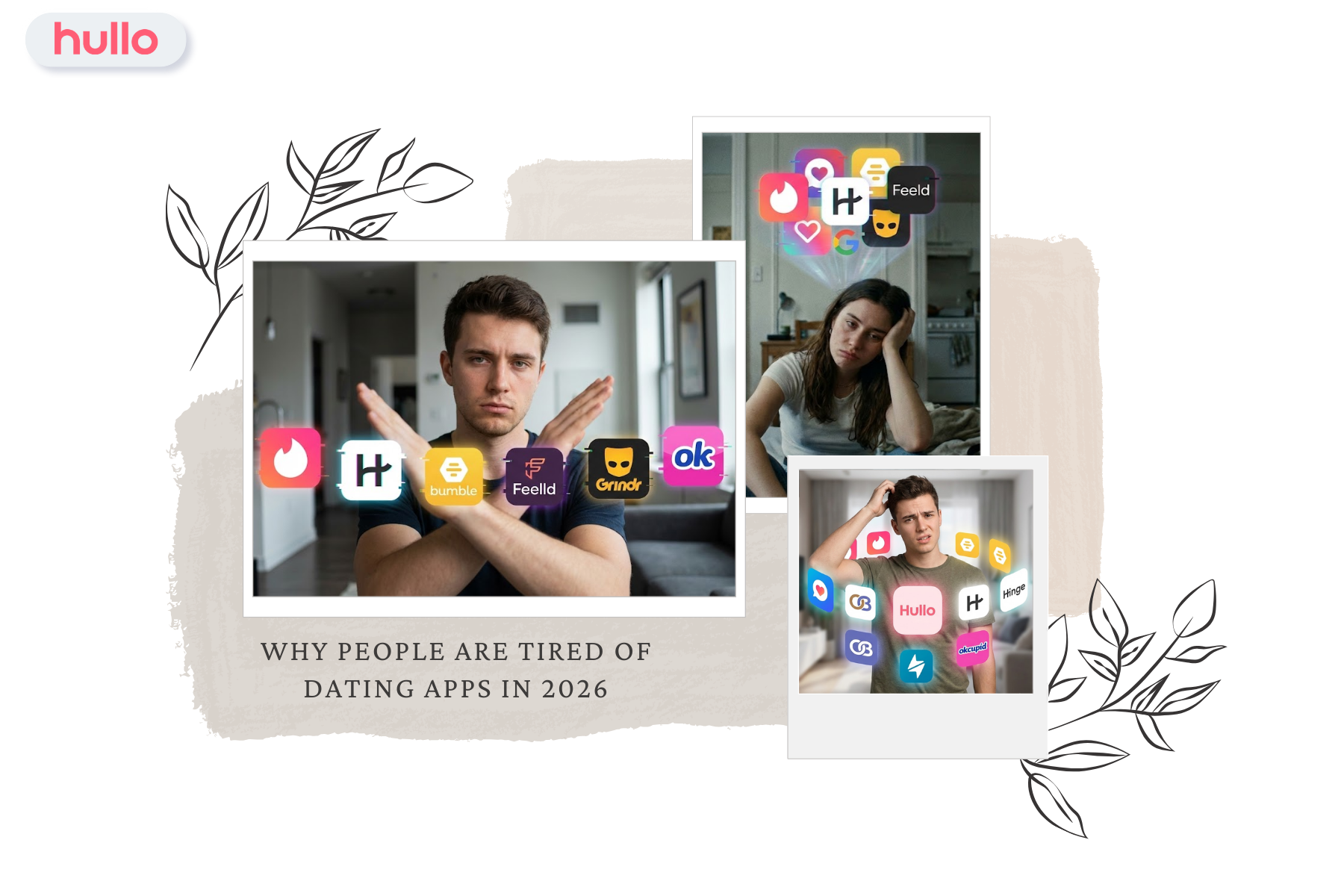
What Is Dating Fatigue and Why Is It Everywhere?
Dating fatigue is not about giving up on love. It is about being worn down by the process of modern online dating.
Common signs include:
-
Feeling bored or unmotivated to reply to messages
-
Repeating the same conversations with different people
-
Losing excitement after matching
-
Taking frequent breaks from dating apps
Psychologists describe this as emotional depletion caused by repetitive low-reward interactions. When effort does not lead to emotional payoff, motivation naturally declines.
This pattern becomes even stronger in environments shaped by swiping culture and decision fatigue in modern dating, where users are constantly asked to choose, reject, and move on within seconds.
Research on online dating psychology shows that users who experience repeated short-lived interactions are 52% more likely to feel disengaged within three months. Over time, dating becomes something people endure rather than enjoy.
Swipe Culture: When Too Many Options Kill Desire
One of the biggest causes of dating fatigue in 2026 is swipe culture.
Dating apps encourage fast decisions based on limited information. Profiles are judged in seconds, and rejection becomes almost automatic. While this creates efficiency, it also removes emotional presence from the experience.
Behavioral data reveals that:
-
Users spend an average of 6–8 seconds deciding on a profile
-
More than half of all matches never turn into conversations
-
Increased choice leads to lower emotional commitment
This explains why dating app matches rarely turn into conversations. When everyone feels replaceable, connections lose meaning. This constant sense of disposability fuels exhaustion and emotional detachment.
Why Conversations Feel Empty on Dating Apps
Another major contributor to dating fatigue is conversation burnout.
Most dating app conversations follow predictable patterns:
-
Generic openers
-
Surface-level questions
-
Short, low-effort replies
Studies on digital communication show that conversations without emotional cues are 47% more likely to end within the first five messages. Without shared context or emotional depth, interactions quickly feel mechanical.
This problem is amplified by dating app algorithms that fail to create real connections, where quantity of matches is often prioritized over communication compatibility.
When you connect with people who truly align with your values and communication style, conversations feel more natural and easier to maintain.
When compatibility is designed into the match instead of left to chance, dating feels lighter and less exhausting.
Hullo focuses on behavior, interests, zodiac signs, and communication patterns to help conversations flow more naturally: hullo.dating
Emotional Burnout and the Mental Cost of Modern Dating
Dating fatigue has real emotional consequences.
Research in digital mental health indicates that:
-
62% of dating app users feel rejected more frequently than in offline dating
-
48% report decreased self-esteem after prolonged app usage
-
Ghosting significantly increases anxiety and distrust
This aligns closely with the rise of ghosting culture and emotional burnout in online dating. When dating repeatedly ends without closure, people begin to protect themselves emotionally by disengaging. What looks like indifference is often accumulated exhaustion.
Why Authentic Profiles Matter More Than Ever
Poorly constructed profiles contribute heavily to dating fatigue.
When profiles lack depth, users struggle to find meaningful conversation starters. This leads to repetitive chats and shallow engagement. On the other hand, profiles that reflect real personality create immediate context.
Data from online dating platforms shows that well-developed profiles increase conversation duration by over 40% and significantly improve match quality.
To help users express themselves more clearly, Hullo provides an AI Bio Generator designed to create authentic, personality-driven profiles: hullo.dating/ai-bio-generator
First Voice and the Return of Human Connection
In 2026, people crave authenticity more than polished perfection.
Text-only interactions often strip away emotion, tone, and warmth. This is why voice-based features are becoming increasingly valuable. Hearing someone’s voice creates instant emotional context and builds trust faster.
Studies on voice communication show that voice-based introductions can increase perceived trust by up to 35% and reduce early-stage ghosting. When dating feels more human, fatigue naturally decreases.
How Users Are Redefining Online Dating in 2026
As dating fatigue grows, expectations are changing.
Modern users want:
-
Fewer but higher-quality matches
-
Deeper emotional signals
-
Less pressure to perform
-
More authenticity from the start
Platforms that focus on compatibility, communication quality, and emotional realism are becoming preferred alternatives to swipe-heavy models.
If you are looking for a more intentional dating experience with smarter matching and real human connection, you can download Hullo here: hullo.dating/download
Dating Fatigue Is a Signal, Not a Failure
Feeling tired of dating apps in 2026 does not mean you are doing something wrong. It means the system you are using may no longer meet your emotional needs.
Dating fatigue is a signal that people want deeper connections, better conversations, and more intentional matching. When technology supports authenticity instead of endless swiping, dating becomes enjoyable again.
With AI-powered matchmaking, First Voice listening, and tools that encourage real self-expression, Hullo offers a calmer, more human approach to modern dating.
People Also Ask
Why are people tired of dating apps in 2026?
Because repeated swiping, shallow conversations, and emotional burnout make dating feel exhausting rather than exciting.
What is dating fatigue?
Dating fatigue is emotional exhaustion caused by prolonged dating app use without satisfying emotional results.
Can dating apps still work despite dating fatigue?
Yes. Apps that focus on compatibility, authenticity, and emotional depth can significantly reduce dating fatigue.