
Have you ever ignored a red flag that your friends noticed immediately? That gap between what you feel and what other people see is one reason friends avoid toxic relationships more often than the person inside the romance. Research from an NIH-hosted review on emotion and decision-making and a brain-mapping study of early-stage romantic love helps explain why. Emotions shape judgment under uncertainty, and early attraction activates reward systems that can make potential feel bigger than present behavior.
That is why understanding how friends help avoid toxic relationships in dating matters. A trusted friend is not necessarily more cynical than you are. They are simply less caught up in chemistry, hope, and the desire to make the story work. Some people call that influence friendfluence. At its best, it gives you a clearer view of risk before confusion turns into attachment.
Why Friends Avoid Toxic Relationships Better Than You Do
Understanding why friends avoid toxic relationships better than you do starts with one uncomfortable truth: attraction changes perception. When you really want something to work, your brain does not weigh every signal equally. Warmth, intensity, and occasional reassurance can outweigh inconsistency, disrespect, or emotional withdrawal. Research on decision-making shows that emotion plays a central role when people judge uncertain situations, and research on romantic love links early attachment to activation in dopamine-rich reward systems.
This does not mean love is foolish. It means love is motivational. You keep looking for reasons to stay open. You reinterpret mixed signals as complexity. You tell yourself that pressure is passion, or that emotional distance is just a stressful week. Friends, by contrast, are emotionally detached observers. They are more likely to ask whether behavior is stable, respectful, and repeated over time.
That difference matters because toxic dynamics rarely announce themselves clearly in the beginning. They survive inside the gap between emotional reasoning and pattern recognition. Emotional reasoning asks, “What if they mean well?” Pattern recognition asks, “What keeps happening?” Friends often live in the second question. That is why their perspective can protect you when your own judgment is working overtime to preserve hope.
How Friends Avoid Toxic Relationships by Spotting Red Flags Early
Friends avoid toxic relationships by spotting the behaviors people in love keep reinterpreting. The danger is usually not one dramatic scene. It is a sequence of behaviors that makes you feel smaller, more anxious, or less clear over time. Guidance from Cleveland Clinic and Australia’s eSafety Commissioner shows that manipulation often begins with intense attention, pressure, monitoring, or repeated boundary pushing that later hardens into control.
Common early signs friends catch include:
- Inconsistent communication that swings between warmth and distance
- Love bombing that feels flattering but pushes intimacy too fast
- Control disguised as care, such as constant check-ins or monitoring
- Boundary violations, especially when your discomfort is minimized
- Apologies that sound sincere but never lead to changed behavior
These patterns are easy to rationalize when you are emotionally invested. From the outside, they are easier to name. Cleveland Clinic notes that love bombing often escalates into demands, gaslighting, or isolation, while the eSafety Commissioner warns that repeated monitoring, pressure, and hot-cold behavior can signal coercive control.
The broader online environment makes this harder. In its research on dating apps, Pew Research Center found that 52% of users said they had come across someone they believed was trying to scam them, while 48% reported experiencing at least one unwanted behavior on a platform. When dating already contains that much ambiguity, a friend’s outside view becomes more useful, not less.
Friends avoid toxic relationships by identifying red flags, emotional inconsistency, and unhealthy patterns that people in love often overlook. Their outside perspective helps reduce emotional bias and improve safer dating decisions.
Friends Avoid Toxic Relationships in Online Dating Environments
In digital dating, friends avoid toxic relationships in online dating environments because apps make inconsistency easier to hide. A text can look caring while staying vague. A message thread can feel intense without becoming accountable. Silence can always be explained away as stress, work, anxiety, or bad timing. That is why confusing chats often feel less like clear rejection and more like emotional static.
Text also removes some of the cues people rely on to judge sincerity. A five-experiment study on voice-only communication, conducted with 1,772 participants, found that voice-only communication improved empathic accuracy relative to visual-only and multi-sense conditions. In simple terms, vocal cues often reveal internal states more accurately than stripped-down digital exchanges do.
That helps explain why so many people end up sending screenshots to friends after a confusing match. They are trying to rebuild context. If a conversation keeps cycling between intense attention and emotional distance, a friend can often see the pattern faster. The same logic sits underneath ghosting culture and emotional burnout, where uncertainty slowly drains energy even before a relationship officially exists. Friends are not there to make the decision for you. Their value is that they can see sequence, timing, and inconsistency without the emotional fog of attraction.
If you want to avoid toxic patterns from the start, Hullo offers AI matchmaking that looks at communication style and compatibility signals, plus an AI Bio Generator that helps you present yourself more clearly before confusion takes over.
When Friend Influence Protects You vs When It Misleads You
Whether friends avoid toxic relationships for you or simply add noise depends on the quality of their influence. Not every warning is wisdom. Some reactions come from care and observation. Others come from projection, jealousy, or fear.
| Factor | Healthy Friend Influence | Toxic Friend Influence |
|---|---|---|
| Basis | Behavior patterns | Personal bias |
| Intent | Protection | Control |
| Outcome | Better decisions | Confusion |
Healthy friend influence is usually specific. It sounds like, “He keeps apologizing and then repeating the same thing,” or “You seem more anxious every time you talk to her.” Toxic friend influence is vague and self-centered. It sounds like, “I just do not trust anyone from apps,” or “You always pick the wrong people.” One response names behavior. The other turns your relationship into a stage for someone else’s fear.
A 2025 study in Social Psychological and Personality Science, based on 757 people in intercultural romantic relationships, found that friend approval emerged as the most robust predictor of relationship quality. The authors also note that approval dynamics vary by source and relationship stage, which is an important reminder that outside input matters, but context matters too.
If you want the wider social backdrop, how friends influence dating decisions is useful reading. In practice, the safest filter is this: listen hardest when concern is repeated, concrete, and focused on behavior rather than identity. Good friends protect your clarity. Overprotective friends replace it with pressure.
What Data Says About Friends and Toxic Relationships
Data also helps explain why friends avoid toxic relationships more effectively when communication is clear. The most useful public Hullo insight here is not a claim that friends are always right. It is a simpler observation about how healthier interactions begin. In a Hullo article on conversation quality, the team reports that users who send personalized first messages receive up to 2.3 times more replies than people who use generic openers. Hullo also reports that profiles clearly expressing personality, interests, and communication style can lift message initiation by over 40%.
That matters because toxic dynamics love vagueness. Clearer profiles, more specific openers, and better early conversations create more observable behavior. And observable behavior is exactly what both you and your friends need in order to judge consistency, respect, and intent before attachment grows. When a situation stays blurry, people fill the gaps with fantasy. When it becomes specific, patterns become harder to excuse.
External research points in the same direction. The 2025 Social Psychological and Personality Science study found that friend approval was the strongest predictor of relationship quality in its sample. That does not mean group opinion should control your life. It means trusted social feedback carries real relational weight, especially when it responds to repeated behavior rather than isolated moments.
Friends avoid toxic relationships because outside observers are less affected by attraction and better at reading repeated behavior. Research on emotion, online dating, social approval, and early communication suggests that trusted friend feedback becomes most useful when it points to clear patterns such as pressure, control, inconsistency, or boundary violations.
Real-Life Examples of How Friends Avoid Toxic Relationships
Seeing how friends avoid toxic relationships becomes clearer through real-life patterns, not just theory. Many people only recognize unhealthy dynamics after someone else points them out.
One common example is love bombing. At the start, it feels flattering. Constant attention, fast emotional intimacy, and big promises create a strong sense of connection. But a friend might notice how quickly things escalate and ask a simple question: “Why does it feel rushed?” Before that moment, it may feel exciting. After, you begin to notice pressure behind the intensity.
Another example is inconsistent texting. You might interpret delayed replies as busyness or stress. A friend, however, sees the pattern: intense engagement followed by silence, repeated over time. Before awareness, it feels confusing but hopeful. After awareness, it becomes a clear cycle.
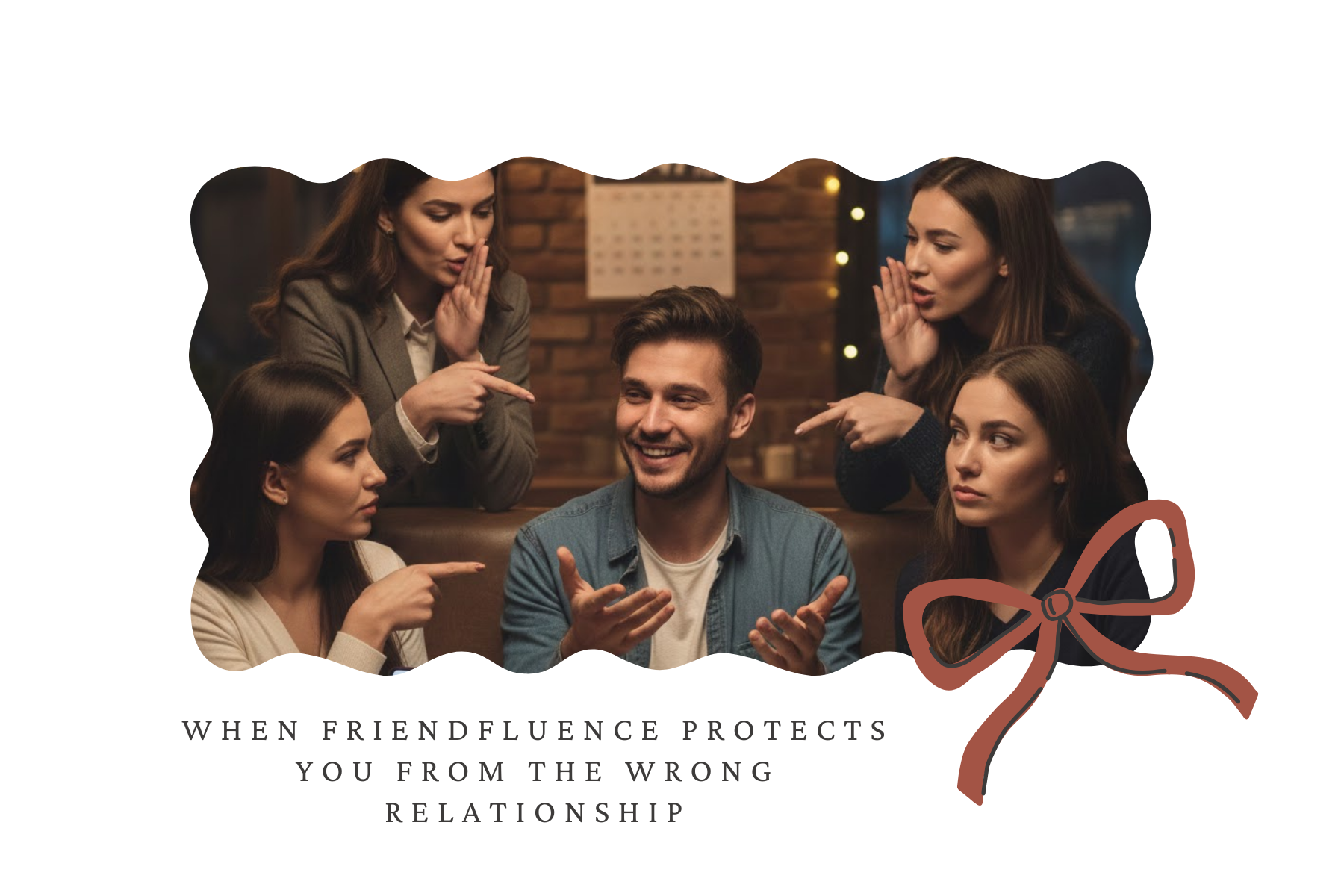
Group settings reveal even more. Friends may notice controlling behavior that feels subtle one-on-one. Comments about who you should see, how you should act, or how often you should check in might seem caring at first. When multiple friends point it out, the pattern becomes harder to ignore.
These examples show one thing clearly. Friends avoid toxic relationships by recognizing patterns early, before emotional attachment makes those patterns harder to leave.
Tips to Use Friends to Avoid Toxic Relationships Without Losing Yourself
Learning how friends avoid toxic relationships is helpful, but using that input wisely matters even more. The goal is not to replace your judgment. It is to strengthen it.
Here are practical ways to use friend input without losing autonomy:
- Listen to repeated concerns
One comment may reflect preference. Repeated observations usually reflect patterns. - Ask for specific behavioral examples
Instead of accepting “I don’t like them,” ask what actions caused concern. Clarity matters more than opinion. - Avoid defensive reactions
Feeling protective is natural, but immediate defensiveness can block useful insight. - Compare feedback with your own experience
Notice whether what your friends say aligns with moments where you felt uneasy. - Maintain decision autonomy
Friends provide perspective, not decisions. You still choose what feels right.
The healthiest approach is balance. Strong relationships are built through awareness, not control. When you combine internal intuition with external perspective, your decisions become more grounded and less reactive.
Build healthier relationships from the beginning with Hullo, where matching is based on personality and communication style: hullo.dating
Why Emotional Compatibility Reduces Toxic Relationship Risk
A key reason friends avoid toxic relationships more effectively is that they focus less on attraction and more on alignment. Emotional compatibility plays a central role in that difference.
Attraction creates connection, but it does not guarantee stability. Emotional alignment, on the other hand, shapes how two people communicate, respond to stress, and respect boundaries. When communication styles match, misunderstandings decrease. When emotional expectations align, pressure and confusion become less common.
Clear communication is especially important. Many toxic dynamics are not obvious at the start. They grow in unclear spaces where expectations are never defined. When both people express themselves openly, patterns become visible earlier, making it easier to assess compatibility before deeper attachment forms.
This is also where prevention becomes possible. Instead of relying on friends to detect problems later, emotionally aligned connections reduce the likelihood of those problems forming in the first place.
Start dating with clarity instead of confusion using Hullo First Voice to hear real personalities before matching: hullo.dating/download
At its core, friends avoid toxic relationships by offering something you often cannot give yourself in the moment: clarity without emotional bias. Their perspective helps you see patterns, question inconsistencies, and recognize behaviors that might otherwise be explained away.
The key is balance. Your intuition matters, but so does consistent, thoughtful feedback from people who care about you. When both align, decisions become stronger and more grounded.
The goal is not to let others control your relationships. It is to increase awareness so that you can make better choices earlier. In modern dating, where signals are often mixed and intentions unclear, that awareness is one of the most valuable advantages you can have.
Intentional dating is not about avoiding risk completely. It is about recognizing it sooner and responding with clarity instead of confusion.
People Also Ask
How do friends avoid toxic relationships?
They recognize behavioral patterns, emotional inconsistency, and red flags that are harder to see when you are emotionally involved.
Can friends really help you avoid toxic partners?
Yes, especially when multiple trusted friends identify consistent patterns over time rather than isolated incidents.
How does Hullo help avoid toxic relationships?
Hullo focuses on emotional compatibility and communication style, helping users build clearer, more stable connections from the start.
Why is emotional compatibility important in Hullo matching?
Because aligned communication and emotional expectations reduce confusion, making unhealthy patterns easier to detect or avoid early.