
Why do some relationships feel intense, all-consuming, and emotionally exhausting at the same time?
The answer often lies in codependency. While many people confuse it with love or deep emotional connection, codependency is actually a pattern where one person loses their sense of self in order to maintain the relationship.
In modern dating, it is easy to mistake constant attention, emotional reliance, and attachment for closeness. However, when a relationship starts to feel overwhelming instead of supportive, it may be driven by unhealthy dependency rather than genuine connection.
Understanding codependency is essential if you want to build relationships that feel stable, balanced, and emotionally healthy. When you recognize the difference between connection and dependency, you can create a relationship where both people grow instead of losing themselves.
Hullo is an AI-powered matchmaking app designed to create authentic, emotionally balanced connections. It uses behavior, interests, zodiac signs, and location to recommend compatible matches. With its listen-before-you-meet voice feature, users can sense real chemistry before chatting, making dating safer and more natural. Try it today at hullo.dating
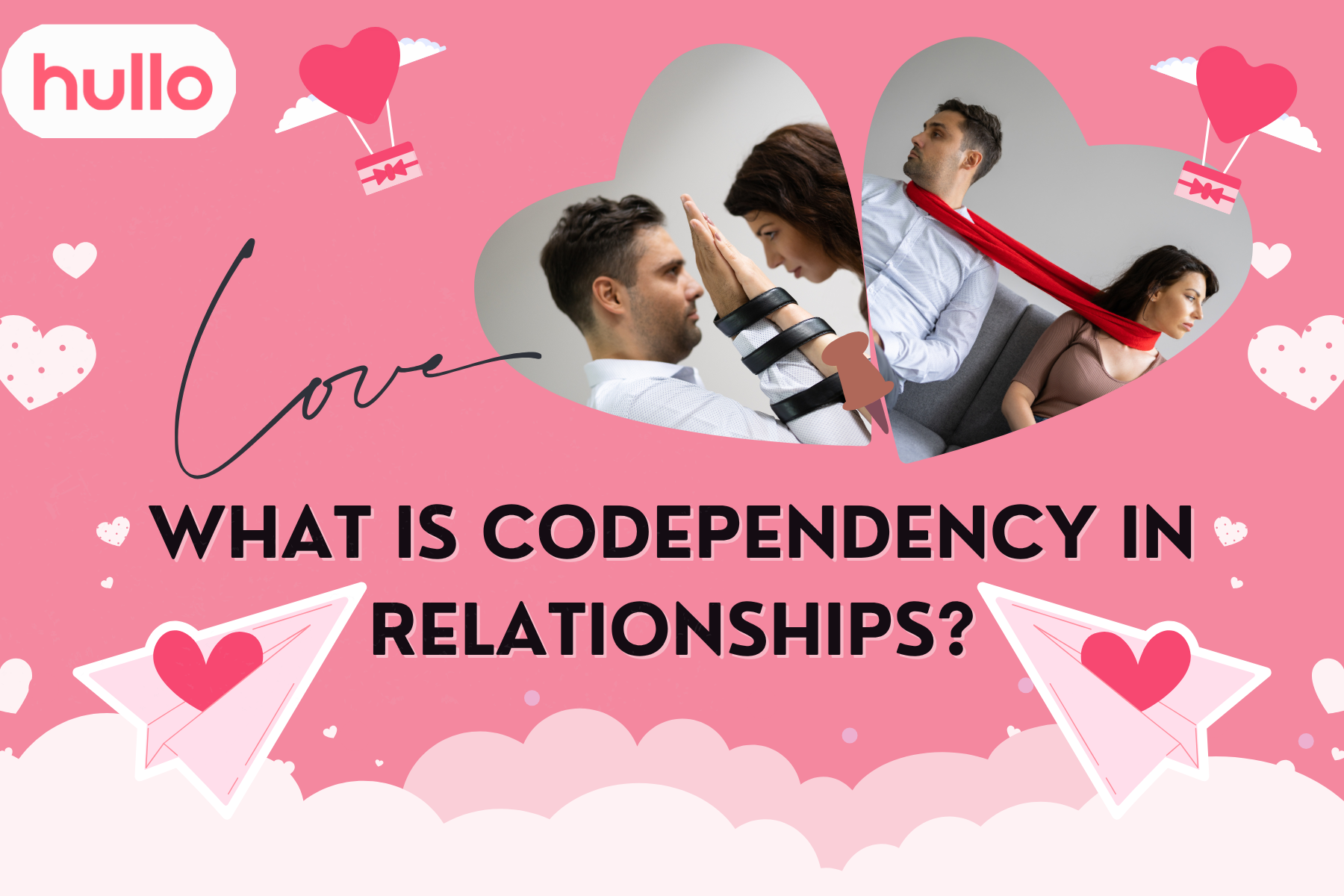
What Is Codependency?
Codependency is a relationship pattern where one person prioritizes the other’s needs, emotions, or approval to the point of neglecting their own. It often involves excessive emotional reliance and difficulty functioning independently.
In codependent dynamics, self-worth becomes tied to the relationship. One partner may feel responsible for the other’s happiness, while the other may rely heavily on that support. Over time, this creates an imbalance.
This pattern frequently appears in toxic relationships, where emotional boundaries are weak or unclear.
Unlike healthy love, which supports independence, codependency limits it. Instead of two individuals choosing each other, it becomes a situation where one or both feel unable to function without the relationship.
Codependency is a relationship pattern where one person prioritizes another’s needs over their own to the point of losing emotional independence. It often involves excessive reliance, low boundaries, and fear of rejection.
Signs of Codependency
Recognizing the signs of codependency in relationships can help you understand whether a relationship is healthy or unbalanced.
One of the most common signs is a strong fear of being alone. People may stay in unhealthy situations simply to avoid feeling abandoned.
Another sign is people-pleasing behavior. This includes constantly prioritizing your partner’s needs, even when it negatively affects your own well-being.
You may also notice difficulty setting boundaries. Saying no feels uncomfortable, and personal limits are often ignored to keep the relationship stable.
Additional signs include:
- Constant need for reassurance
- Emotional dependence on one person
- Feeling responsible for your partner’s emotions
- Loss of personal identity
In contrast, healthy relationships allow both individuals to maintain independence while still feeling connected.
Codependency is a common but often misunderstood pattern in relationships. It involves emotional reliance, lack of boundaries, and self-sacrifice that can lead to imbalance and long-term dissatisfaction. Recognizing early signs helps individuals build healthier and more independent connections.
Causes of Codependency
Codependency does not appear randomly. It often develops from early emotional experiences and learned behavior.
One major factor is childhood environment. People who grow up in households with inconsistent emotional support may learn to prioritize others’ needs in order to feel accepted.
Another cause is low self-worth. When individuals do not feel confident in their value, they may seek validation through relationships.
Fear also plays a role. A strong fear of abandonment can lead people to hold onto relationships tightly, even when they are unhealthy.
Psychological research links codependency to attachment patterns. According to the American Psychological Association, individuals with insecure attachment styles are more likely to develop dependent relationship behaviors.
These factors combine to create a cycle where emotional reliance feels necessary, even when it leads to imbalance.
How Codependency Develops Over Time
Codependency does not usually appear suddenly. It develops gradually through repeated emotional patterns that feel normal at first but become unhealthy over time.
In the early stage, the relationship may feel intense and close. One partner begins to rely on the other for emotional support, validation, or reassurance. At this point, it often feels like deep connection rather than dependency.
As the relationship progresses, this reliance increases. Emotional needs become centered on one person, and outside sources of support, such as friends or personal interests, start to fade. This shift reduces independence without being immediately noticeable.
Over time, boundaries begin to weaken. Saying no becomes difficult, and personal needs are often ignored to maintain harmony in the relationship. One partner may prioritize the other’s feelings consistently, even at their own expense.
In the later stage, identity becomes closely tied to the relationship. Self-worth may depend on the partner’s approval, and the idea of losing the relationship can feel overwhelming. This creates a cycle where both emotional stability and self-image rely heavily on the connection.
Because this process happens slowly, many people do not recognize codependency until it begins to affect their emotional well-being.
Codependency vs Healthy Love
Understanding the difference between codependency and healthy love is key to building better relationships.
| Factor | Codependency | Healthy Love |
|---|---|---|
| Identity | Lost in partner | Independent |
| Boundaries | Weak or unclear | Clear and respected |
| Emotional state | Anxious and reactive | Stable and secure |
| Decision-making | Driven by fear | Driven by trust |
In healthy love, both individuals maintain their sense of self. They choose to be together, but they do not rely on each other for identity or emotional stability.
In codependent relationships, the connection often feels intense but unstable. There is a constant need for reassurance, and emotional balance depends on the other person.
The key difference is growth. Healthy relationships support personal development, while codependency often limits it.
Effects of Codependency in Relationships
Codependency can have serious emotional and psychological effects over time.
One of the most common outcomes is emotional burnout. Constantly prioritizing another person’s needs can become exhausting.
Another effect is loss of identity. When your sense of self depends on the relationship, it becomes difficult to understand who you are outside of it.
Relationships may also become unbalanced. One partner gives continuously, while the other becomes dependent. This creates resentment and frustration.
Over time, this dynamic can lead to:
- Increased conflict
- Emotional instability
- Lack of personal growth
- Long-term dissatisfaction
Even though codependent relationships may feel intense, they often lack the stability needed for long-term success.
How to Break Codependency
Breaking codependency is possible, but it requires awareness and consistent effort.
Here are practical steps to build healthier patterns:
1. Build self-awareness
Recognize your behavior and understand how it affects your relationships.
2. Set clear boundaries
Learn to say no and protect your emotional space.
3. Develop independence
Focus on your own interests, goals, and personal growth.
4. Strengthen self-worth
Work on valuing yourself without relying on external validation.
5. Seek support
Talking to a therapist or trusted person can help break patterns.
Start building healthier connections with emotional balance on Hullo: hullo.dating
Change does not happen overnight, but small steps can lead to significant improvement.
Codependency in Modern Dating
Modern dating environments can sometimes encourage codependent behavior.
Dating apps often create validation loops, where people seek constant attention through matches and messages. This can lead to emotional dependence on external feedback.
Another pattern is over-attachment too early. When communication is frequent and intense from the beginning, it can create a false sense of closeness.
This environment makes it easy to confuse attention with connection.
Match with people who value emotional independence and compatibility hullo.dating/download
Healthy dating involves balance. Emotional connection should develop gradually, not out of urgency or fear.
What Data Says About Codependency
Real user behavior highlights how emotional independence impacts dating success.
According to Hullo data, users who rely less on constant validation tend to have more stable and longer conversations. This suggests that emotional independence plays a key role in building meaningful connections.
Additionally, users who engage in balanced communication, where both sides contribute equally, are more likely to transition from chatting to real relationships.
External research supports this. A Pew Research study found that emotionally balanced interactions lead to higher satisfaction in online dating experiences.
The key insight is:
- Dependency creates pressure
- Independence creates attraction
Real-Life Examples of Codependency
Codependency often appears in subtle ways that may not be obvious at first.
Example 1
One partner constantly seeks reassurance, asking questions like “Do you still like me?” or “Are you sure everything is okay?” multiple times a day.
Example 2
A person feels unable to say no, even when they are uncomfortable. They agree to everything to avoid conflict.
Example 3
Someone defines their identity entirely through the relationship. Their mood, decisions, and self-worth depend on their partner.
Build connections that feel balanced and real with Hullo hullo.dating
These patterns may feel like closeness, but they often signal emotional imbalance.
Codependency is often mistaken for love, but it creates imbalance rather than connection. It limits independence and makes relationships emotionally unstable over time.
Recognizing codependency is the first step toward change. When you understand the signs and causes, you can begin to build healthier patterns.
Strong relationships are not about losing yourself. They are about maintaining your identity while sharing your life with someone else.
By focusing on emotional balance, clear boundaries, and self-awareness, you can create relationships that feel supportive, stable, and meaningful.
People Also Ask
1. What is codependency in a relationship?
It is a pattern where one person relies too heavily on their partner and neglects their own needs.
2. What are signs of codependency in relationships?
Common signs include people-pleasing, fear of being alone, lack of boundaries, and emotional dependence.
3. How does Hullo help avoid codependency?
Hullo promotes emotionally balanced connections by matching users based on compatibility and communication style.
4. Can dating apps reduce emotional dependency?
Yes, when they focus on meaningful interaction and emotional compatibility instead of validation.