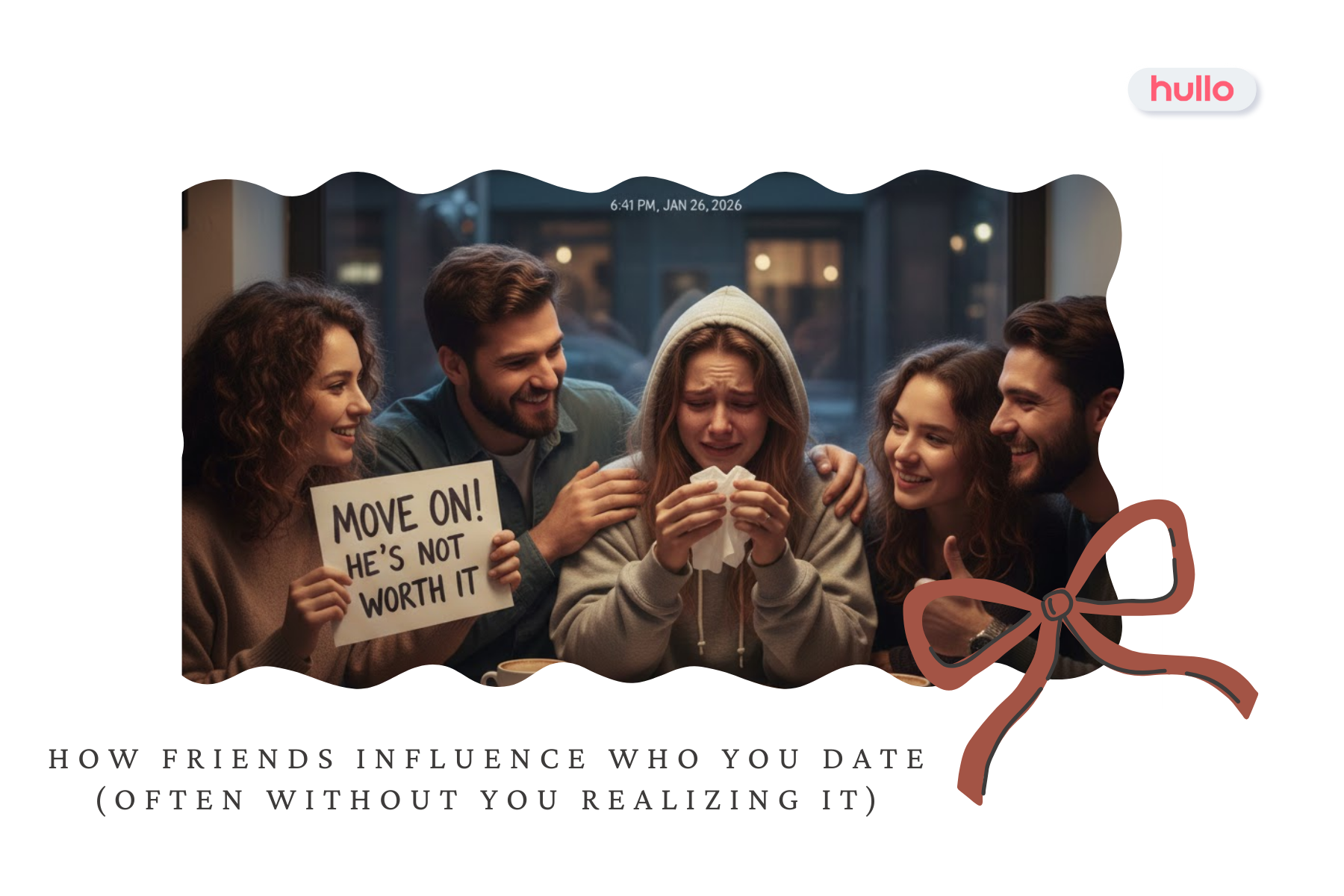
Why Friends Influence Dating Decisions More Than You Think
The reason friends influence dating decisions so strongly comes down to basic human psychology. People are wired to seek approval from those they trust. This behavior, often described as social proof, helps individuals feel safe and confident in uncertain situations.
When it comes to dating, uncertainty is everywhere. You are evaluating someone new, interpreting signals, and deciding whether to invest emotionally. In these moments, the brain looks for external validation to reduce risk.
According to research from the American Psychological Association on social influence, individuals consistently rely on group feedback to guide decisions, especially in ambiguous situations. Dating is one of the most ambiguous areas of life, which makes social input even more powerful.
Friends act as emotional filters. Their approval can reinforce your attraction, while their skepticism can introduce doubt. This process often happens subconsciously, which is why many people feel their opinions are independent when they are not.
Over time, this pattern shapes not only individual choices but also personal standards, expectations, and relationship behaviors.
How Friends Influence Dating Decisions Through Attraction
Attraction is often seen as something personal, but friends influence dating decisions by amplifying or weakening that attraction through emotional validation.
When friends react positively to someone you are dating, your brain interprets that response as a signal of value. You may feel more excited, more confident, and more invested. On the other hand, if friends express concern or hesitation, that same attraction can start to feel uncertain.
This dynamic is closely tied to the balance between physical and emotional connection. As explored in this discussion on physical vs emotional attraction, initial attraction may begin with appearance, but it is reinforced or weakened by emotional and social context.
For example, imagine telling your friends about a great date. If they respond with enthusiasm and curiosity, your feelings tend to grow. If they respond with silence or skepticism, you may begin to question what you originally felt.
Friends do not create attraction from nothing. Instead, they shape how strongly you trust that attraction. Emotional validation acts as a multiplier, increasing or decreasing the intensity of your feelings.
This is why two identical dating experiences can feel completely different depending on the reactions of your social circle.
How Friends Influence Dating Decisions in Real Life
Understanding how friends influence dating decisions becomes clearer when you look at real-life situations. This influence appears at every stage of dating, from the beginning to the end.
Before dating, friends often act as advisors. You may show them profiles, ask for opinions, or look for subtle approval before even starting a conversation. Their reactions can determine whether you pursue someone at all.
During dating, feedback loops become stronger. Group chats analyze messages, tone, and timing. A simple comment like “that feels like a red flag” can shift your perception instantly. Even when nothing has objectively changed, your emotional response adjusts to match the group’s perspective.
This effect becomes even more noticeable in modern dating culture, where communication patterns are often ambiguous. As discussed in this article on ghosting culture and emotional burnout, uncertainty already creates stress, and external opinions can amplify that stress further.
During the breakup phase, friend influence becomes even stronger. People are significantly more likely to end relationships when their close circle consistently disapproves. Sometimes this protects individuals from unhealthy situations. Other times, it introduces doubt that would not exist otherwise.
The key pattern is consistent. Friends do not just observe your dating life. They actively shape it.
Friends Influence Dating Decisions More in Online Dating
Online dating environments make it even more likely that friends influence dating decisions. Without real-world context, people rely more heavily on external opinions to interpret what they see.
Profiles, messages, and interactions are often shared and analyzed in group settings. This creates a situation where dating decisions are no longer private but socially processed.
According to Pew Research on online dating behavior, a large percentage of users consult friends when deciding whether to continue conversations or meet someone in person. This highlights how common social validation has become in digital dating.
The lack of clarity in profiles also increases dependence on others. When information is vague, people seek reassurance. When profiles are clear and authentic, confidence increases and reliance on friends decreases.
This is where the structure of a dating platform matters. When compatibility is based on deeper factors like communication style and personality, decisions feel more grounded and less influenced by outside noise.
If you want clearer dating decisions without overthinking with friends, Hullo helps you match based on real compatibility: hullo.dating
What Data Reveals About Friend Influence
One of the clearest ways to understand how friends influence dating decisions is through actual behavioral data.
According to behavioral patterns observed on Hullo, users who consult friends before replying to matches tend to show measurable differences in behavior. They experience a decrease in response speed and are more likely to disengage from conversations early.
Specifically, users who frequently ask friends for input show a 25 percent decrease in reply rate and a 30 percent increase in ghosting behavior. This suggests that external validation, while comforting, can disrupt natural communication flow.
These findings align with broader research on decision-making. A study published on ScienceDirect examining social influence on judgment found that individuals exposed to group opinions are more likely to adjust their decisions, even when their initial judgment was accurate.
The implication is clear. Social input can increase perceived safety, but it can also reduce authenticity. When decisions are filtered through multiple perspectives, they become less intuitive and more reactive.
Recognizing this pattern helps individuals regain control over their dating choices and trust their own emotional signals.
Friends influence dating decisions through social validation, shared expectations, and emotional feedback, often shaping attraction and relationship outcomes without conscious awareness.