
Navigating the dating scene in Seoul feels less like a casual stroll through a park and more like an ultra-competitive strategy game where social status, aesthetics, and digital responsiveness are the primary currencies. To understand how to date in Seoul, one must first acknowledge the intense marriage-delay tension currently gripping the capital. While the city remains one of the most romanticized destinations globally due to the K-Drama effect, the ground reality is shaped by a generation of young professionals who are simultaneously hyper-connected and increasingly isolated.
The emotional atmosphere is a paradox of high-speed pursuit and cautious commitment. On one hand, you have couple culture, evident in the matching outfits at Lotte World or the ubiquitous 100-day anniversary celebrations. On the other, there is a growing trend of voluntary singleness as a response to the crushing cost of living and rigid social expectations. According to the Seoul Metropolitan Government, the city’s population has dipped to 9.3 million residents as of early 2026, with the decline driven largely by the high economic threshold required to establish a family in the capital.
Dating in Seoul Dating in Seoul is distinguished by its high-efficiency matching culture, where initial compatibility is often vetted through social data points like career, education, and even MBTI. Unlike the casual, slow-burn approach common in many Western cities, Seoul’s dating scene operates on a fast-tracked timeline of Sogaeting (blind dates) and digital-first communication. The core tension lies in the shift from marriage as a social requirement to marriage as a selective marker of economic privilege.

What Dating Culture Is Really Like in Seoul
Dating in Seoul is deeply transactional yet performative. The concept of Some (pronounced ssum), the pre-relationship stage where two people have something going on, is a critical cultural phase. It is a period of intense texting and strategic push and pull (mil-dang) before a formal confession (goback) is made. Exclusivity is rarely assumed; it must be explicitly declared, often on a specific date that then becomes Day 1 of the relationship.
Gender roles, while evolving, still carry the weight of traditional expectations. Men are often expected to initiate and plan the first few dates, while women emphasize a neat appearance and emotional receptivity. However, as housing prices in districts like Gangnam and Mapo skyrocket, these roles are being challenged by the necessity of dual-income households and a more pragmatic approach to partnership.
As Professor Koo Jeong-woo of Sungkyunkwan University noted in a recent 2026 social behavior study for The Korea Herald, “The perception of marriage and childbirth appears to be rebounding after reaching a low point. Young people seem increasingly aware of the risks of living alone, including mental health concerns.”
Best Way to Date in Seoul The most effective way to date in Seoul is through a hybrid approach of Sogaeting (introductions via friends) and high-quality dating apps. To navigate the city’s fast-paced expectations, using a tool like Hullo helps users refine their digital first impression, ensuring your profile reflects the polished aesthetic valued in the local market.
Demographics That Shape Dating in Seoul
The dating market in Seoul is essentially a reflection of its demographic shifts. The city is aging, and the marriage-delay phenomenon is no longer a trend; it is the baseline.
-
Average Age of First Marriage: According to 2025 data from Statistics Korea, women in South Korea are marrying for the first time at a historic high average age of 31.6, while for men, the average age has reached 33.9.
-
Marriage Rebound Statistics: Despite long-term declines, recent 2026 reports indicate that marriages recorded between January and October of the previous year rose 8% compared to the same period in 2024, suggesting a tentative shift in how youth view companionship.
-
Foreign Resident Inflow: Seoul remains a magnet for international talent, recording a net inflow of 2,185 general foreigners in 2025, driven largely by a surge in international students and young professionals.
These numbers suggest that dating in Seoul is increasingly about selective partnership. People are waiting longer to ensure they have the financial specs (specifications) required to start a life in one of the world’s most expensive cities.
Finding a partner who shares your long-term goals in such a high-stakes environment requires more than luck. You can Download Hullo to access a network of individuals who value transparency and verified profiles.
Who You’ll Meet When Dating in Seoul
-
The Spec-Heavy Professionals: These are locals working in K-Silicon Valley (Pangyo) or major conglomerates like Samsung or LG. Their dating lives are often scheduled around intense work hours, and they value efficiency and status.
-
The Returnees (Kyopo): Koreans who studied abroad and have returned to Seoul. They often struggle with the rigid hierarchy of local dating and tend to congregate in Apgujeong or Hannam-dong.
-
The Global Nomads and Expats: Mostly found in Itaewon or Yeonnam-dong. They bring a more casual, Western-style dating approach that sometimes clashes with the local expectation of quick exclusivity.
-
The Gold Miss and Gold Mister: Successful, single individuals in their late 30s or early 40s who have prioritized career over marriage and are now looking for partners with similar lifestyle autonomy.
Online Dating in Seoul: Behavioral Reality
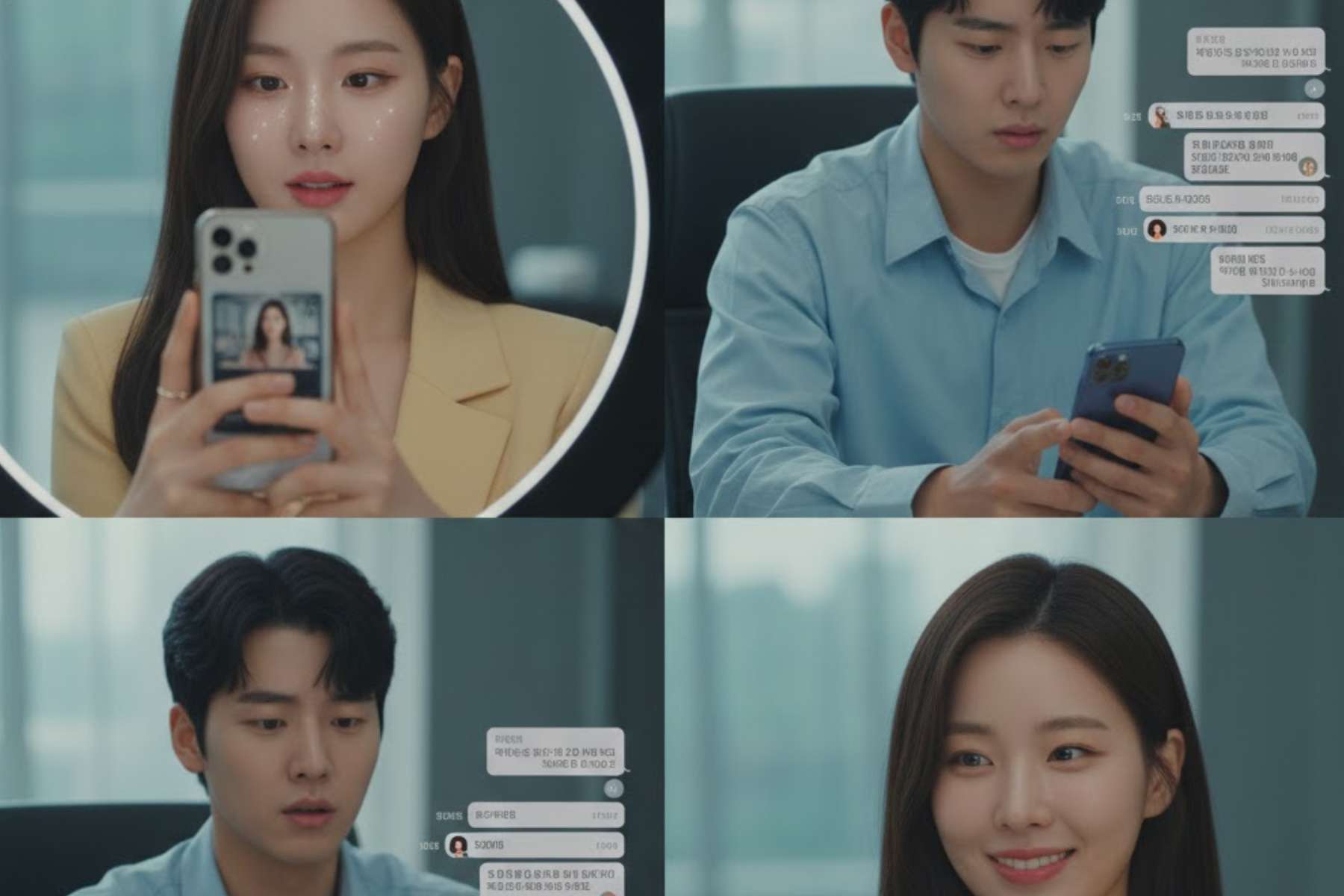
Messaging is the heartbeat of dating in Seoul. If you do not reply within a few hours, it is often interpreted as a lack of interest. Ghosting is common, but it usually happens before the first date or immediately after if the vibe is not perfect. Profiles are highly curated; photos are often professional or heavily filtered to meet the high standard of K-beauty.
Research indicates that for many Korean women, perceived risks regarding privacy lead to a preference for apps that feel closed or verified. Unlike the more casual swipe culture of the West, dating in Seoul often moves from the app to KakaoTalk quickly, where the real screening begins.
If you are struggling to stand out in a sea of highly polished profiles, the Hullo AI Bio Generator can help you craft a bio that balances local cultural nuances with your unique personality.
Offline Dating in Seoul: What Actually Works
While apps are booming, the cold approach (stopping someone on the street) is rare and often viewed with suspicion unless you are in a high-energy nightlife district like Hongdae.
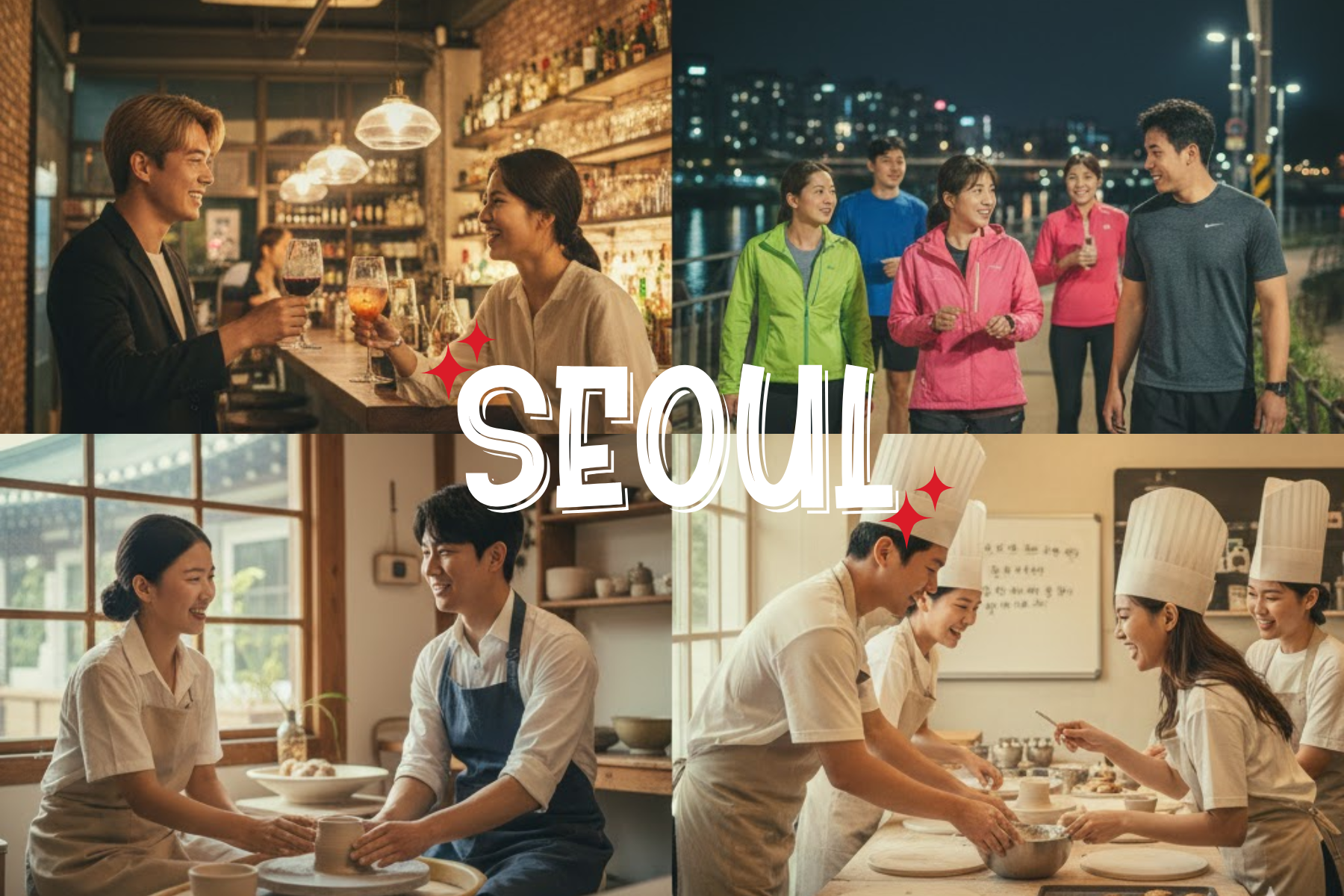
Instead, focus on Taste Communities:
-
Wine and Highball Bars: In areas like Seongsu-dong, these are the new meeting grounds where shared interests in gastronomy lead to natural conversations.
-
Running Clubs: Han River running crews have become a major social outlet for singles in their 20s and 30s.
-
One-Day Classes: From pottery in Bukchon to baking in Gangnam, these are socially safe ways to meet people without the pressure of a formal date.
Common Dating Mistakes in Seoul
-
Underestimating Read Receipts: In KakaoTalk culture, leaving someone on read (the number 1 disappearing next to the message) is a loud statement. Be prompt or explain your delay.
-
Dressing Down: Seoul is a fashion capital. Showing up to a date in casual gym wear, unless it is a hiking date, is seen as a sign of disrespect or low effort.
-
Ignoring MBTI: It may seem like a fad, but for many Seoulites, it is a legitimate tool for initial screening. Not knowing your type can stall a conversation.
-
Splitting the Bill on Date One: While Dutch pay is increasing, the traditional move is for the person who invited the other to pay for the first round, and the other person to pay for the second (coffee or dessert).
Do and Don’t When Dating in Seoul
DO:
-
Learn the Second Round (2-cha) Culture: Dates rarely end after dinner; be prepared for a change of scenery like a cafe or a lounge.
-
Use Oppa and Nuna Correctly: These age-based honorifics add a layer of intimacy once you are officially dating.
-
Acknowledge Anniversaries: Even small ones like the 22nd day or 100th day are celebrated with gifts or special meals.
-
Be Clear About Your Intentions: Given the marriage-delay tension, some are looking for casual fun while others are on a strict marriage track.
DON’T:
-
Be Overly Physical in Public: While holding hands is fine, heavy PDA is still frowned upon in many parts of the city.
-
Mention Your Ex: Korean dating culture tends to focus heavily on the present and future; discussing past relationships early on is a major faux pas.
-
Forget Your Battery Pack: Between constant messaging and navigating via Naver Maps, a dead phone is a dating disaster.
-
Assume Some Means Exclusively Dating: Until the formal confession happens, both parties are technically free agents.
30-Day Dating Strategy for Seoul
Week 1 to 2: The Digital Sifting Focus on high-quality interactions on apps. Do not drag out the chatting phase. In Seoul, the goal is to move from the app to KakaoTalk within 3 days and to a face-to-face meeting within 7 to 10 days.
Week 3: The Vibe Check Date Meet in a neutral but trendy neighborhood like Yeonnam-dong. Keep it to coffee or a light dinner. This is where you assess if the Some energy has legs and if the person matches their digital “specs.”
Week 4: The Deep Dive If the first date was successful, plan a full-course date. This should involve dinner, a walk (perhaps the Han River or a palace), and a 3-cha (third round) like a vinyl bar. This is the week to decide if you want to make the relationship official.
Ready to navigate the complexities of Seoul’s dating scene with confidence? Visit Hullo to find meaningful connections tailored to your lifestyle.
People Also Ask
Is dating in Seoul expensive? Yes, it can be. A typical date involving dinner at a trendy restaurant and coffee can easily cost 70,000 to 100,000 KRW. Many young people cite financial burdens as a reason for not dating, with roughly 16.8% of newlyweds even delaying marriage registration to maintain housing benefits and avoid economic penalties.
Do I need to speak Korean to date in Seoul? In international hubs like Itaewon, English is sufficient. However, for the broader local pool, basic Korean is essential. Most locals appreciate the effort, and it significantly broadens your potential matches beyond the expat bubble.
What is the 4B Movement I keep hearing about? The 4B movement (no sex, no child-rearing, no dating, no marriage) is a radical feminist movement in Korea. While it represents a specific subset of the population, its underlying sentiments regarding gender inequality influence the broader marriage-delay tension seen across the city.
Are blind dates still popular? Absolutely. Sogaeting remains the most trusted method for many locals because the intermediary acts as a voucher for the person’s character, education, and social background, reducing the risk of a “bad match.”
What is the marriage-delay society? It refers to the sociological shift where marriage is no longer viewed as a requirement for adulthood. With the average age of first marriage for women now at 31.6 years old, the timeline for dating has been significantly pushed back due to economic and social pressures.