

Have you ever liked someone until your friends made you doubt them?
Modern dating is often described as a space of freedom and personal choice. Yet in reality, many romantic decisions today are no longer made alone. From sending screenshots in group chats to asking friends to interpret messages, dating has quietly become a shared experience.
This shift is known as friendfluence dating. It describes how friends influence romantic choices, especially in the early stages when uncertainty is high. In the context of friendfluence in modern dating, this influence has grown stronger due to dating apps, constant communication, and the need for reassurance.
According to research from Pew, younger users increasingly rely on social input when navigating online relationships, and surveys suggest that around 60% of Gen Z discuss dating decisions with friends before acting. You can explore more in this Pew Research report on online dating behavior.
Understanding this dynamic helps explain why dating today often feels more complex than it should.
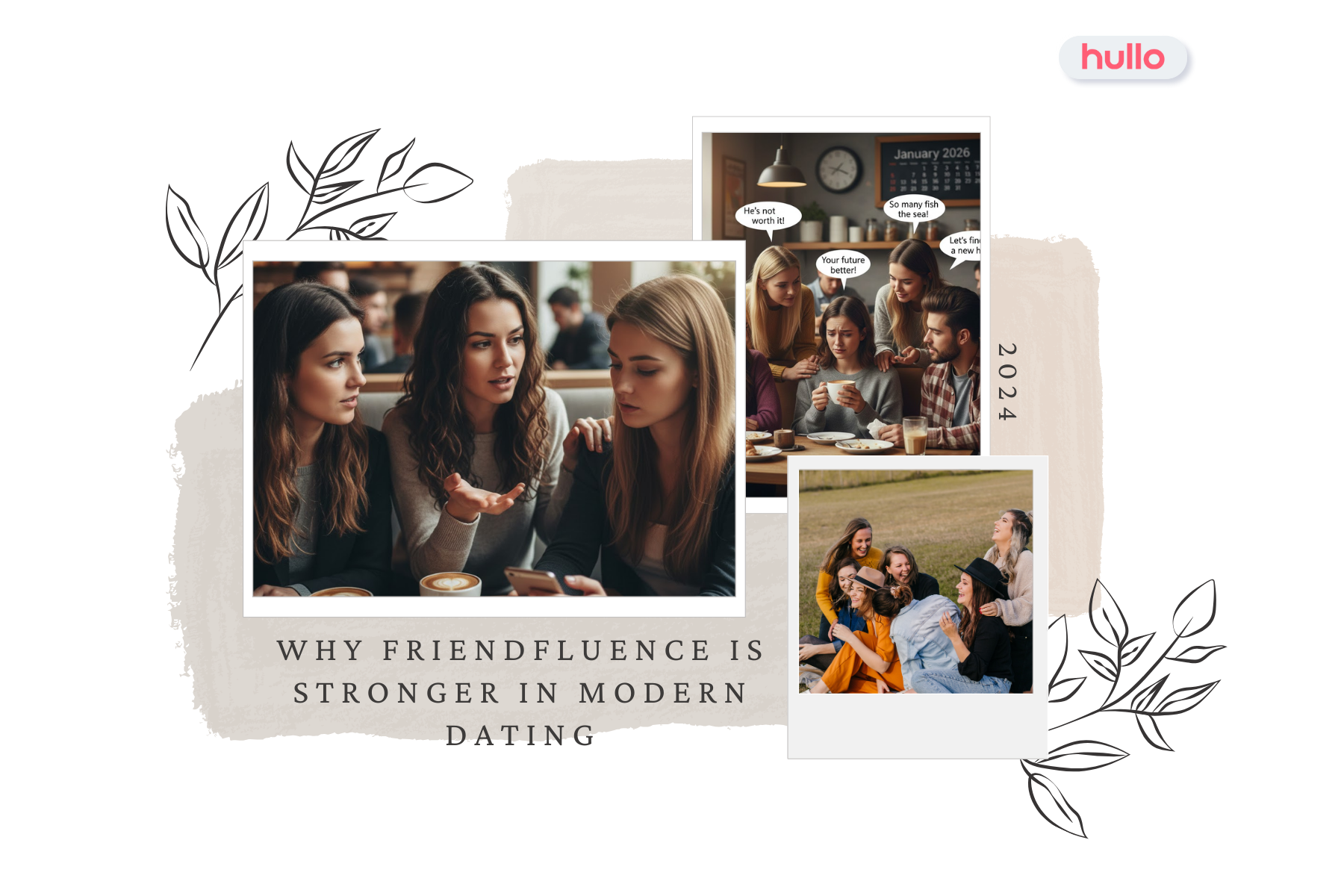
What Is Friendfluence Dating
Friendfluence dating refers to the growing role friends play in shaping romantic decisions. It is not just about asking for advice. It is about how external opinions begin to influence perception, attraction, and timing.
In modern dating environments, this influence emerges for several reasons. Dating apps create an overwhelming number of choices. People fear choosing the wrong partner. And social validation has become more important in digital spaces.
In traditional dating, decisions were often grounded in personal experience and shared social circles. You met someone through mutual connections, and trust developed naturally. Today, profiles are disconnected from real-life context. As a result, people rely more on friends to fill in the gaps.
Friends become interpreters, advisors, and sometimes decision-makers. They review messages, question intentions, and validate choices.
Friendfluence dating refers to the growing influence friends have on romantic decisions, especially in early stages of modern dating where uncertainty and choice overload are high.
Why Friendfluence Dating Is Stronger Today
Friendfluence dating is not new, but it has become significantly stronger in modern dating environments. Three key factors explain this shift.
First, there are simply too many options. A well-known study from Columbia University showed that excessive choice can increase anxiety and reduce satisfaction with decisions. You can review the original research here: Columbia Choice Overload Study. In dating apps, users can scroll through hundreds of profiles, making it harder to trust their own judgment.
Second, online dating lacks context. Profiles offer limited information, and small details can be easily misinterpreted. Without shared social environments, people turn to friends to help evaluate compatibility.
Third, fear of regret plays a major role. According to Pew Research, many online daters worry about missing out on better options. This uncertainty encourages people to seek reassurance before making decisions.
The contrast between past and modern dating highlights this shift:
| Past Dating | Modern Dating |
|---|---|
| Limited options | Endless swiping |
| Social context | Anonymous profiles |
| Personal intuition | Group validation |
Together, these factors create an environment where friend influence feels necessary rather than optional.
How Friendfluence Dating Affects Your Decisions
Friendfluence dating can shape decisions in both helpful and harmful ways. On one hand, friends offer protection and perspective. They can notice red flags you might overlook and provide emotional support during uncertain situations.
On the other hand, this influence can introduce doubt. When multiple opinions enter the picture, clarity often decreases. You may begin to question feelings that initially felt natural.
A common scenario illustrates this clearly. You meet someone and feel a genuine connection. The conversation flows, and you are interested in seeing where it goes. Then you share screenshots in a group chat. Your friends analyze every detail. One points out a delayed reply. Another questions tone. Suddenly, what felt simple becomes complicated.
This is closely related to situations discussed in topics like mixed signals in dating, where external interpretation can amplify confusion. It also connects to why real life dating matters, because in-person interaction often provides clarity that group opinions cannot.
Positive effects include:
- Emotional support
- Broader perspective
- Risk awareness
Negative effects include:
- Overthinking
- Delayed responses
- Reduced confidence
The key difference lies in whether friend input supports your intuition or replaces it.
Dating Insight: What Hullo Data Reveals
Friendfluence dating does not just affect feelings. It also impacts behavior and outcomes.
According to Hullo data, users who rely heavily on friend feedback before replying are 30% more likely to delay conversations and 20% more likely to lose momentum in early-stage connections.
This delay often disrupts the natural flow of communication. When responses become calculated instead of instinctive, conversations lose authenticity.
| Behavior | Outcome |
|---|---|
| Trust own instinct | Faster connection |
| Ask friends first | Slower replies |
This pattern suggests that friend influence can unintentionally create friction. Instead of helping decisions, it can slow them down and weaken early emotional momentum.
If you want to build real connections without overthinking every step, Hullo helps you match based on deeper compatibility: hullo.dating
Friendfluence Dating in Gen Z vs Millennials
Friendfluence dating is not experienced equally across generations. Gen Z and Millennials approach it differently.
Gen Z tends to be more group-driven. They frequently share profiles, messages, and dating experiences in real time. Group chats often act as decision hubs, where multiple opinions shape next steps. This makes friend influence a constant presence throughout the dating process.
Millennials, on the other hand, are more selective. They may seek advice during important moments such as deciding to commit or navigating conflict, but they rely less on friends in the early stages.
Data from Statista supports these behavioral differences, showing higher engagement with social feedback among younger users.
The comparison highlights distinct patterns:
| Gen Z | Millennials |
|---|---|
| High peer validation | More independent |
| Early influence | Later influence |
Understanding these differences helps explain why friendfluence feels more intense for younger daters.
When Friendfluence Dating Becomes a Problem
Friendfluence dating becomes problematic when it starts to override personal judgment. While advice can be helpful, excessive reliance on it creates dependency.
One common issue is projection. Friends may apply their own past experiences or fears to your situation. What they see as a warning may not reflect your reality.
Another sign is losing your own voice. If you find yourself waiting for approval before responding or making decisions, it suggests that external input has taken priority over internal clarity.
Waiting for consensus can also delay relationships. Timing matters in dating, and hesitation can weaken connection.
This is especially important when considering how proximity in dating builds trust. Real connection develops through interaction, not prolonged analysis.
Friendfluence dating reflects a shift in modern relationships where social validation plays a central role in romantic decisions. While it can offer support and perspective, over-reliance on friends may reduce confidence, slow decision-making, and impact emotional clarity. Balancing external input with personal intuition is key to building healthy and authentic connections.