
Why do so many dating app conversations die before they even start?
You match with someone. There is initial attraction. Maybe even excitement. But then nothing happens. No reply. No conversation. Just silence.
This pattern is more common than most people think. According to behavioral data from platforms like Pew Research, a large percentage of matches never turn into meaningful conversations. Many estimates suggest that close to 70% of matches fail to progress beyond the first message stage.
The reason is not always lack of attraction. In many cases, the real issue lies in first message mistakes. These small but critical errors shape how the other person perceives your intent, effort, and emotional awareness.
Understanding first message mistakes dating app users make can completely change how your conversations start and whether they continue.
Why First Message Mistakes Matter More Than You Think
The first message is not just an opener. It is your first impression, your tone setter, and your signal of intent all at once.
When someone reads your message, they are not just processing the words. They are interpreting subtle psychological cues such as effort, safety, and curiosity. These signals help them decide within seconds whether to engage or ignore.
First message mistakes on dating apps often reduce reply rates because they signal low effort, lack of personalization, or poor emotional timing. Research shows that short, personalized messages create stronger engagement than generic or overly long introductions.
In practice, this means even a simple message can carry strong meaning. A short but thoughtful message can feel engaging. On the other hand, a generic or poorly timed message can feel dismissive or even uncomfortable.
Data supports this behavior. Studies referenced by Statista show that most users make quick decisions about replies based on message quality rather than profile attractiveness alone.
Another important factor is the decision window. Users often decide whether to respond within seconds. This is why micro signals such as tone, specificity, and relevance matter more than long explanations.
In short, first message mistakes are not small errors. They are often the reason conversations never begin.
Most Common First Message Mistakes on Dating Apps
Understanding the most common first message mistakes dating app users make helps you avoid patterns that quietly reduce your chances of getting a reply.
Sending Generic Openers
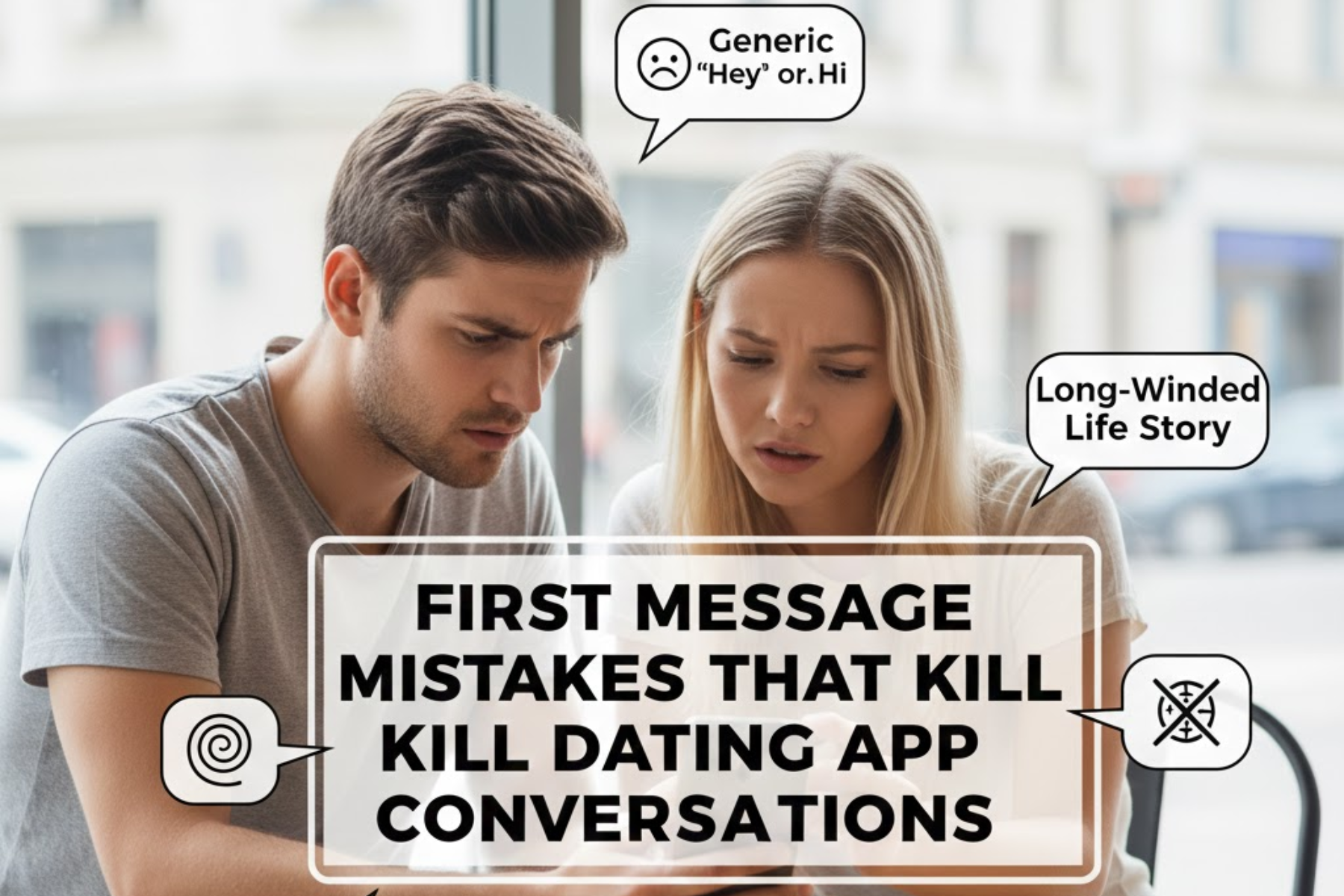
Messages like “Hey”, “Hi”, or “What’s up” are extremely common. However, they often fail because they do not give the other person anything to respond to.
These openers shift the burden of conversation onto the receiver. Instead of feeling engaged, they feel like they need to carry the interaction.
For example, compare:
- “Hey”
- “I saw your travel photo in Bali, what was your favorite part?”
The second option creates immediate context and curiosity.
Hullo also helps you create profiles that naturally invite better first messages instead of forcing awkward openers. Build yours with the AI Bio Generator: hullo.dating/ai-bio-generator
Focusing Only on Appearance
Compliments can work, but focusing only on looks often feels shallow. Messages like “You’re hot” or “So sexy” may signal attraction, but they lack emotional depth.
Research in online dating behavior suggests that people respond better to messages that acknowledge personality or interests rather than appearance alone.
A better approach is to comment on something meaningful in the profile. This shows attention and respect.
Writing Overly Long Messages
Long messages may seem thoughtful, but they often create pressure. When someone receives a paragraph from a stranger, it can feel overwhelming.
Behavioral insights from platforms like Hinge indicate that shorter messages tend to perform better in early interactions.
The goal is not to impress with length. It is to spark curiosity.
Asking Boring Questions
Questions like “What do you do?” or “Where are you from?” are not wrong, but they rarely create emotional engagement.
They feel transactional. Like an interview.
Instead, adding context or emotion can make a big difference:
- “What do you enjoy most about what you do?”
- “What made you choose that city?”
This small shift creates a more human interaction.
Turning Sexual Too Early
One of the most damaging first message mistakes is introducing sexual content too soon.
Even if attraction exists, early sexualization can signal lack of boundaries or seriousness. According to relationship research from Psychology Today, trust is built through emotional safety first, not immediate intimacy.
The most common first message mistakes on dating apps include using generic greetings, focusing only on appearance, writing long messages, asking boring questions, and failing to reference profile details.
What First Messages Actually Get Replies
To move beyond mistakes, it is important to understand what actually works.
According to internal Hullo data, users who start conversations with personalized messages receive significantly higher reply rates compared to those using generic openers. This aligns with broader industry findings from eHarmony, which highlight personalization as a key driver of engagement.
Ready to turn matches into real conversations instead of dead chats? Hullo is designed to make dating feel more human from the very first message. Explore more at hullo.dating
Another key pattern is message structure. Messages that include exactly one thoughtful question tend to perform better than those with multiple questions. When users ask too many questions at once, it creates cognitive load and reduces reply likelihood.
Profile quality also plays a role. Profiles with clear personality signals make it easier to start conversations naturally. This reduces reliance on forced or generic openers.
From a psychological perspective, simplicity often outperforms creativity. People respond to messages that feel natural and relevant rather than overly clever or scripted.
The core insight is simple but powerful. The best first message is specific, short, and human. It shows attention without trying too hard. It creates curiosity without pressure.
When you avoid common first message mistakes and apply these insights, conversations become easier to start and more likely to continue.
What to Say Instead of These First Message Mistakes
Avoiding first message mistakes is only half the solution. The real improvement comes from knowing what to say instead and having a simple framework you can rely on.
A strong first message does not need to be clever or complicated. It just needs to feel human.
Start by referencing something specific in the profile. This shows attention and effort immediately. For example, instead of a generic opener, you could say, “That hiking photo looks amazing, where was it?” This creates context and gives the other person something natural to respond to.
Next, ask one open-ended question. Keep it focused. When you ask too many questions, it can feel overwhelming. A single thoughtful question invites conversation without pressure.
Tone is another important factor. Try to match the style of the profile. If their bio is playful, you can be light and casual. If it feels more serious or reflective, adjust your tone accordingly. This alignment builds comfort early on.
Finally, keep your message short. One or two lines are enough. The goal is to spark interest, not tell your whole story.
If you want to improve your overall strategy beyond avoiding first message mistakes, you can explore this guide on how to get more matches on a dating app to understand how profile quality and messaging work together.
Why Conversations Still Fail Even Without First Message Mistakes
Even when you avoid common first message mistakes, conversations can still fail. This is where many people get confused.
The truth is, not every failed conversation is caused by the first message. Sometimes the issue lies in deeper factors such as compatibility and timing.
One major reason is mismatched communication style. Some people prefer quick, playful exchanges, while others lean toward slower, more thoughtful conversations. When these styles do not align, the interaction can fade naturally.
Timing also plays a role. Someone might be busy, distracted, or not emotionally available at that moment. This has nothing to do with your message quality.
If you want to avoid common first message mistakes and start conversations that actually get replies, Hullo helps you match based on real compatibility and communication style. Try it here: hullo.dating/download
Emotional readiness is another factor. Not everyone on a dating app is equally prepared to engage in meaningful conversation. Some users are browsing casually, while others are actively looking for connection.
There is also a limitation with text-based communication. Messages lack tone, facial expression, and nuance. According to research from ScienceDirect, text-only interactions can lead to misinterpretation because important emotional cues are missing.
This means even a well-written message can be misunderstood or overlooked.
Understanding these factors helps you avoid overanalyzing every interaction. Not every silence is a mistake. Sometimes, it is simply misalignment.
Tips to Avoid First Message Mistakes and Get More Replies
If you want to consistently avoid first message mistakes and improve your reply rate, the key is to keep your approach simple and repeatable.
Here are practical tips you can apply immediately:
- Keep your message under two lines. Short messages feel easier to respond to and reduce pressure.
- Focus on one idea. Do not try to cover too much in a single message.
- Mirror the tone of the profile. Match their energy instead of forcing your own style.
- Avoid overthinking. Natural messages often perform better than carefully scripted ones.
- Send your message soon after matching. Early interaction increases visibility and response likelihood.
These small adjustments create a noticeable difference over time. Instead of trying to impress, focus on creating a comfortable and engaging starting point.
Consistency matters more than perfection. When your messages feel natural, conversations tend to flow more easily.
People Also Ask
Why do first messages fail on dating apps?
They usually fail because they lack effort, personalization, or emotional clarity.
Are long messages better than short ones?
No, short and focused messages perform better in early conversations.
What is the best first message on a dating app?
A short message that references the profile and includes one thoughtful question.
Should you be funny in your first message?
Only if it matches the other person’s tone and style.
How quickly should you send the first message?
Within a few hours after matching is ideal to maintain momentum.