Signs You Are in a Situationship
You can often spot the signs early.
- No label
You spend time together but avoid defining the relationship.
- Hot and cold behavior
Their attention changes quickly.
- No future talk
Long-term plans are avoided.
- Emotional confusion
You feel unsure about where you stand.
For example, you may text daily but never define the relationship. In other cases, someone may disappear for days and return without explanation.
Because of this pattern, situationships create attachment without stability.
Why Situationships Are Increasing
Modern dating plays a big role.
According to Hullo data, users who send personalized messages receive more replies. They are also more likely to build meaningful connections.
At the same time, Pew Research Center reports that many people feel overwhelmed by dating apps. This happens because there are too many options.
As a result, people delay commitment. Instead of choosing one person, they keep exploring.
So, clarity becomes more valuable than ever.
Why People Stay in Situationships
Understanding the situationship vs relationship gap also means understanding why people stay in situationships even when they feel uncertain.
One of the biggest reasons is fear of rejection. Asking for clarity can feel risky, especially if you suspect the answer might not match your expectations.
Another reason is comfort without responsibility. Situationships offer companionship, attention, and intimacy without the pressure of commitment. For some people, that feels easier than building something serious.
There is also hope that things will change. Many people believe that with enough time, effort, or emotional investment, the connection will naturally evolve into a real relationship.
A common example is someone waiting months, even longer, hoping the other person will eventually define the relationship. During that time, emotional attachment grows, but clarity does not.
Research from Psychology Today highlights that this cycle of hope and uncertainty is what keeps many people stuck. It is not always about ignoring red flags. Sometimes it is about holding onto potential instead of reality.
How to Turn a Situationship into a Real Relationship
If you are asking how to turn a situationship into a real relationship, the answer starts with clarity, not guessing.
The first step is to communicate directly. Ask where the connection is going and what the other person wants. Avoid vague conversations. Clear questions lead to clear answers.
Next, watch actions, not just words. Someone who wants a real relationship will show consistency, effort, and emotional availability over time. If their behavior stays inconsistent, that is your answer.
It is also important to set boundaries. Decide what you are willing to accept and what you are not. Without boundaries, situationships can continue indefinitely.
Finally, be ready to walk away. This is often the hardest step, but also the most important. If the other person cannot meet you with clarity, staying will only extend uncertainty.
The shift from situationship to relationship does not happen through patience alone. It happens through mutual intention. Without that, the dynamic usually stays the same.
If you want to start with clarity instead of confusion, Hullo helps you connect with people who value real relationships: hullo.dating
How Dating Apps Influence Situationship vs Relationship
Dating apps have completely reshaped the situationship vs relationship landscape. They make it easier to meet new people, but they also make it easier to avoid commitment.
Fast connections often come without emotional depth. Conversations start quickly, but they can fade just as fast. With so many options available, some people hesitate to invest deeply in one person.
This is where intention matters. Platforms that focus only on swiping can increase surface-level interactions. In contrast, apps like Hullo aim to improve connection quality through AI matchmaking and voice-first interaction, helping users understand emotional compatibility earlier.
For example, when you explore concepts like local dating meaning, you see how proximity and shared lifestyle can strengthen real connections. Combined with deeper communication tools, this reduces the likelihood of falling into undefined situationships.
Real Examples of Situationship vs Relationship
Real-life experiences often explain the situationship vs relationship difference better than definitions.
In one situationship example, two people talk every day, meet regularly, and share emotional intimacy. However, months pass without defining the relationship. One person starts feeling anxious, while the other avoids serious conversations. Eventually, the connection fades without closure.
In another case, a situationship transitions into a relationship. After a few weeks of uncertainty, one person initiates a direct conversation. They align on expectations, agree on exclusivity, and start building something more stable. The key difference is mutual clarity.
A healthy relationship example looks different from the start. Both people communicate openly, make time for each other consistently, and discuss future plans naturally. There is no guessing, only understanding.
These examples show that the difference is not about how often you talk or how strong the chemistry feels. It is about whether both people are moving in the same direction.
Ready to express yourself clearly and attract the right match? Build your profile with Hullo AI: hullo.dating/ai-bio-generator
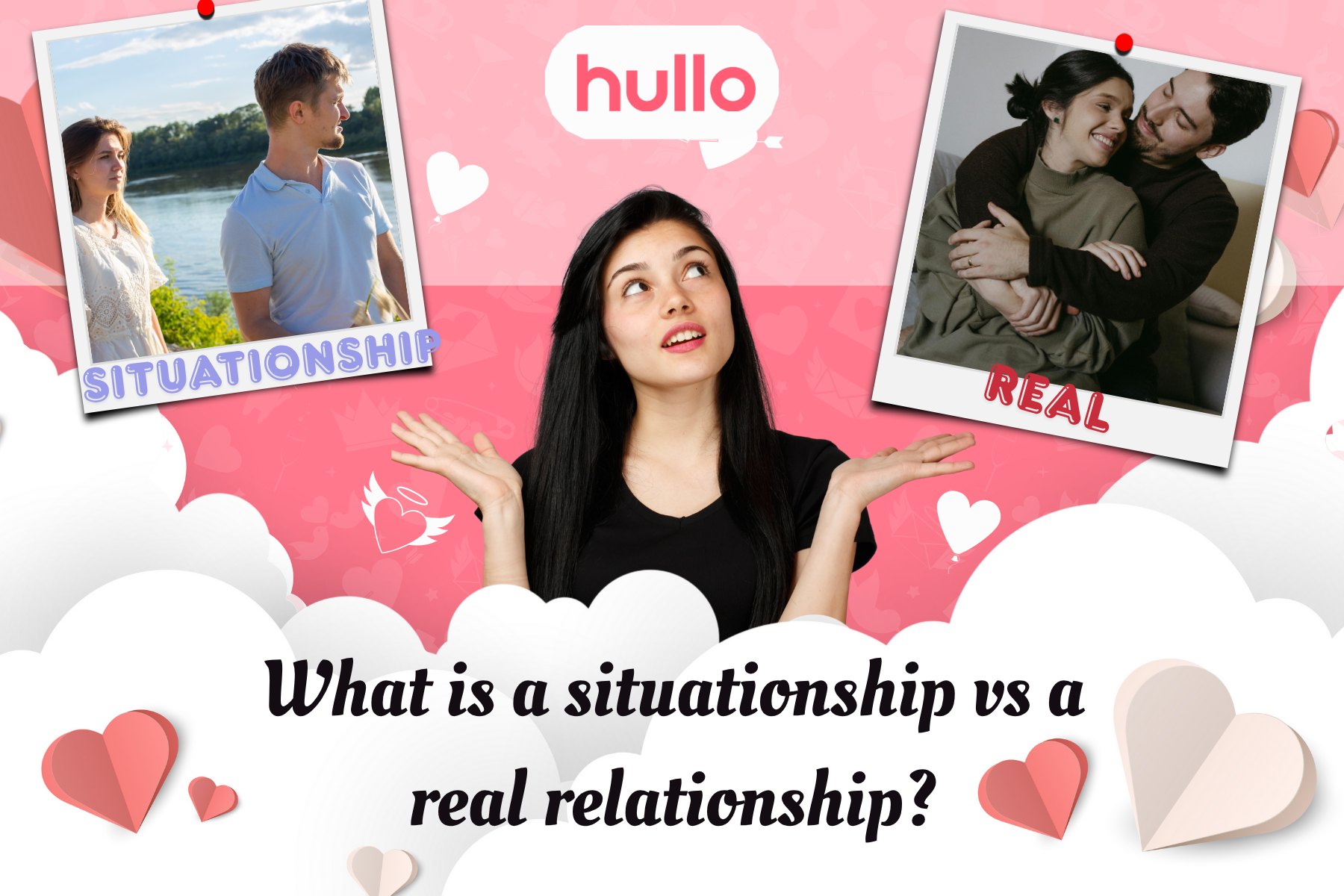
At its core, the situationship vs relationship difference comes down to one thing: clarity versus confusion.
Situationships can feel exciting, emotional, and even meaningful in the moment. But without shared intention, they often lead to uncertainty and emotional imbalance. Real relationships, on the other hand, provide stability, honesty, and direction.
You deserve a connection where you do not have to guess how someone feels or where things are going. Choosing clarity is not asking for too much. It is choosing something real.
Start your dating journey with people who want the same thing as you: hullo.dating/download
People Also Ask
What is the difference between a situationship vs relationship?
A situationship lacks clear commitment. A relationship includes shared goals and consistency.
Can a situationship turn into a real relationship?
Yes, but both people must want it and communicate clearly.
How does Hullo help avoid situationships?
Hullo uses AI matching and voice-first features to create more real connections.
Is Hullo good for serious relationships?
Yes. Hullo focuses on authenticity and meaningful matches.